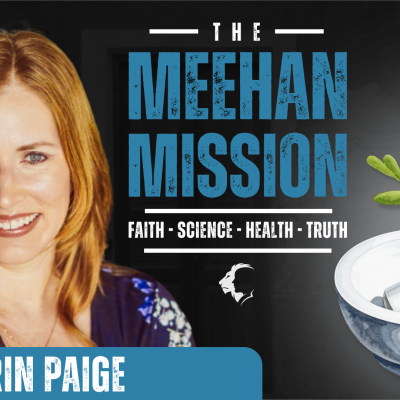
Cathy Meehan: Many years ago, the practice of homeopathy was popular among practitioners when it came to healing ailments of their patients. But what happened? What gave homeopathy such a bad rap? Where did it go? And is it actually having a comeback? Well, I tend to think that it is having a comeback. So today’s episode of the Meehan Mission podcast, I want to introduce everyone to Erin Paige, who’s a homeopathy practitioner. She’ll help answer your questions, give you some great guidance. So let’s get started and let’s welcome Erin.
Cathy Meehan: Hello everyone and welcome to the Meehan Mission podcast. And I am thrilled to introduce our audience to Erin Paige. And Erin, you are with Heartwing Healing. And what I love is to bring movers and shakers and just people that are, I don’t know if you wanna call it disrupting the healthcare system with natural and alternative solutions. But you study homeopathic medicine and I think, you know, there’s a lot of questions behind that. And my idea was let’s bring Erin on, someone who is, you know, deep into homeopathy and just really help share your knowledge with our audience. So first of all, welcome to the show.
Erin Paige: Thank you.
Cathy Meehan: You bet. And we go back a little bit because we both kind met up in the world of child medical freedom is what it would have been. And so we go back quite a ways and you are someone that I really look up to when it comes to finding answers and educating people. So if you don’t mind, start with a little bit of background on how you chose to go down the route of homeopathy.
Erin Paige: Yeah, well, thanks so much for having me, Cathy. So my journey really began maybe about 15 years ago. My son was diagnosed with a very severe autoimmune neuroimmune disorder called PANS or pediatric acute onset neuropsychiatric syndrome. For those of you who are unfamiliar with that diagnosis, it looks maybe a little bit like autism, with a little bit more emphasis on some of the psychiatric kinds of symptoms. But that occurred. I simultaneously was diagnosed with Lyme disease. So I had always been in the realm of natural medicine. My son’s father is a chiropractor. And I went to actually took my son to a pediatrician. who you’ve had on the show, Dr. Bob Sears, and asked him for some information because I didn’t know what was going on with my son. And at the time, and now we’re talking 15 years ago, he was not as familiar with the diagnosis and recommended that my son’s father and I do some research. Well, I went into mama bear mode and was up at all hours of the night trying to figure out what I could do to help my child. And the one consistent intervention, although we’ve tried many, many, many things over the years, was homeopathy. I always tell the story that at the time my son was living inside a cardboard box in my living room. He had not left the house for well over a year and had not left the cardboard box in about three months. I gave him his first dose of homeopathy and he asked if he could leave the house that day twice. So it really was very eye-opening to me. I was not really that familiar with homeopathy. But I knew that it was going to be something that I would need to pursue for the health of my child. And we’ve been utilizing it ever since.
Cathy Meehan: Wow, what a heartbreaking story for a mom. I just, amen, you went into mama bear mode just to find any solution that you could. So will you explain to us what exactly is homeopathy when we hear that term?
Erin Paige: Yeah. So homeopathy, in its foundational principle is essentially like cures like, we’re looking for the simillimum. So Samuel Hahnemann, developed homeopathy in the early to mid 1800s. And he was medical doctor and he postured that, he was utilizing, trying to find a cure for malaria actually. And so he was utilizing a, cinchona bark, which is a, you know, from, from the plant, from the tree. And he found something very interesting when he was trying to figure out the curative mechanism of action. He took some of the cinchona bark and it actually mimicked in him as a healthy person, the symptoms of malaria. So he began postulating that if then he could induce symptoms, perhaps he could treat symptoms with the cinchona bark in malaria patients. But he wanted to find out how little of a dose he could give because obviously he didn’t want to have his patients experience more symptoms from taking the cinchona bark. He just kept titrating lower and lower and lower on the dosage until essentially what he came up with was versions of really a more energetic kind of a dose of these kinds of materials that would then still elicit a positive response. So it’s introducing the minimum dose within a patient and then in order to create a positive immune response. And the patients were getting better taking cinchona bark for malaria, for example. But in the 1900s, homeopathy, well, just so you’re aware and your audience is aware, about 10 to 20 % of all doctors within the United States, even in the early 1900s, were homeopaths. And I know you’ve talked about this before, but because of the creation of entities like the AMA and their takeovers of the medical colleges, they essentially pushed out homeopaths by way of introducing various licensure agreements and things like that, which homeopathy just didn’t have the financial backing in order to continue at that. So it essentially wiped out homeopathy within the United States despite the fact that, you know, like I said, 10 to 20 % of the medical profession was actually homeopathic doctors.
Cathy Meehan: Wow, that’s so interesting. know, again, we have this financial bias that always seems to creep into medical advancements and only to, you know, stop the further growth of something like homeopathy. And so as far as like, it seems to me there’s this rise in patients and even people that if you want to call them healers or practitioners, that are actually starting to go back to more natural and holistic supplements and all of those things, where does homeopathy come to the average person that’s looking for alternatives and solutions?
Erin Paige: Yeah, so a couple of things. So first of all, you’re correct. I think a lot of people are turning more towards homeopathy. In fact, there’s a school that I work with mentoring some of their students called Remedy Academy. And they are just finishing up with their largest cohort of homeopathic students in history. So not just them, but I mean, across all of the schools. So I think they have over 500 students right now and their newest cohort, yeah, their newest cohort is gonna have many, many more. So there is a big push towards some of these more established natural healing modalities. And I think that’s fantastic, right? To so many people in many of my talks that I’ve given is always utilizing homeopathy as a first line intervention because, you why not? Why would we not try to utilize something that is non-invasive, it’s very simple to administer, you know, it’s not expensive. You know, I’m sure mainstream medicine is the reason they can’t stand us, that’s okay. But essentially, people that are coming to me often are, they’re coming to me because they don’t know where else to turn. So they’ve gone to every traditional medical practitioner. A lot of the patients I work with are dealing with complex chronic disorders. Most of my patients are pediatric and parents don’t know what else to do in order to help their children because the mainstream medical model really has failed them when it comes to these very serious chronic kinds of issues. So, I often will see almost like the worst of the worst, but unfortunately, know, homeopathy has been utilized by parents across the board in acute scenarios for, you know, many, many years, including, you know, some of your young parents might be familiar with the teething tablets that have been utilized for, you know, babies and teething toddlers for many, many years. Those are homeopathic in nature. Oscillococcinum, for example, is an over-the-counter homeopathic remedy that is used to treat flu. And then things like Arnica, which is, you know, they’re even utilizing that post-surgery for a lot of patients in outpatient surgical centers. You know, I do think homeopathy is… kind of starting to edge its way into even more mainstream thinking. And my hope is that we can continue to come in at that more acute kind of level so we can help parents to be able to treat their children at home when it’s something that’s not life threatening and they just wanna help. You know, their kiddo who fell and got, you know, a bump on the noggin or something like that. So, you know, all of these kinds of initial exposures to homeopathy, I think are going to be important in order to help people understand that the principles of homeopathy, because really what we’re talking about is an entire paradigm shift. The vast majority of us have been raised in this medical model of a pill for every ill. And homeopathy is literally the opposite of that.
Cathy Meehan: Yeah. So a lot of times we talk about, you know, whether we’re managing disease or are we trying to heal and cure the person? And I’m guessing that homeopathy is more to help heal that person to. is that something that you’re on for a lifetime? Are you going to be on some type of a homeopathy remedy or medication? Or is this sometimes like a one or two doses and you’re done? What’s that kind of look like for the average person?
Erin Paige: Yeah, so I think it really kind of depends on what’s going on, but homeopathy in general is symptom based. So I am looking at you as an overall human being. I’m looking at, you know, not only what are the physical symptoms that you’re experiencing, but also what are your physical characteristics, what’s your family history, what kind of a mental emotional state are you in, both, when you’re experiencing these symptoms as well as when you’re not. So a lot of times people, you know, become very different personality wise when they’re experiencing some kind of health crisis. So homeopathy is designed to look at that overall symptom picture and to help that person heal from within. So what I’m doing with a homeopathic remedy is I’m introducing something that allows your body to recognize, hey, this is what’s going on. Maybe we need to address that so that you can mount your own healing response instead of this idea that we need to suppress symptoms. So we are uprooting the issue within the patient rather than covering up a symptom. Because as you know, Cathy, we don’t wanna keep covering up symptoms. Symptoms are our warning signs, right? So we don’t wanna do that. We wanna make sure that we’re listening to the body and uprooting that particular issue at the base so that we know that we’re bringing about true healing rather than just suppressing the symptoms.
Cathy Meehan: Yeah, that I mean that makes so much sense is there or over the years since you have You know started studying this. Do you see a trend in any particular growing? ailment or a commonality among more people because I and I’m just thinking like anxiety depression You know people with pandas even even that’s growing at you know at an alarming rate But is there this that’s out there among health of our children or our adults.
Erin Paige: Yeah, so I would say, you know, and this could just be because of the nature of my practice and what I’ve dealt with personally, but you know, the vast majority of the people that I’m seeing are dealing with these neuroimmune neuropsychiatric kinds of disorders, and they present very differently. So they look like PANS and PANDAS, but a lot of times it’s disordered eating, or it’s OCD or it’s anxiety. But really, it has to do with oftentimes infections crossing the blood brain barrier, creating this neuroimmune kind of response. I’m seeing that a lot in our kiddos. And unfortunately, what happens is most people chalk it up to… they have a little bit of ADD or something, my kid is just like high energy, or my kid is just low energy on the opposite end of that spectrum or more depressed. And then they get thrown into the psych bucket, which is very, very unfortunate because… that can be a very, very tricky place to navigate because you’re talking about a child who more than likely has a multitude of infections or other environmental triggers like mold, for example. And if we don’t recognize and acknowledge that that’s what’s going on for that particular child, and then we just start to put them on these psychiatric kinds of medications, then unfortunately these kids often will spiral because we’re not addressing the infectious piece. And so, you know, it just really starts to fester and they get worse and worse and worse. And then the psych deems them treatment resistant or, you know, what have you. And these kids just don’t get better. And unfortunately, you know, I think we’re seeing that across the board when we talk about this, you know, the state of mental health, if you will, within our current society. Far too many kids are really, really struggling with mental health disorders, which in actuality could be linked back to other environmental triggers like infections or mold, for example.
Cathy Meehan: Yeah, I mean, you make such a great point. And especially when we look at, you know, Western medicine, if you’re going to your standard pediatrician or family practitioner, they’re going to throw an anti-psychotic or a medication on top of that child. And that’s that might manage some part of their illness, but that’s not going to help make them better. And that’s one of my goals is just to help educate people, to let them know that there are other options out there. And I mean, I was guilty of the same thing. We had five kids and we chose medical procedures called vaccinations on all five of them because we didn’t know any better. We didn’t have that education. And had anyone told me, You know, do you even know what’s in a vaccine? And I’m not trying to make this a vaccine podcast, but it’s just that element of a lack of education, which is why I love having a podcast where we can, you know, spread education around and just plant seeds. And, and I know, Erin, that you have your own podcast also, which the remedy revolution podcast, which I thank you for, you know, help helping spread information out to people, but they they really just need to start with the understanding that there are options out there. And in particular, homeopathy is a very valid option for a lot of ailments that are there. And I want to talk about your practice and how parents and patients can find you and that you actually can conduct consultations remotely. because a lot of people don’t realize with modern technology, remote access is really key nowadays. So walk me through if somebody needed to get in touch with you and if they’re seeking out homeopathy.
Erin Paige: Yeah, absolutely. So anyone can find me at heartwinghealing.com. It’s heart, H-E-A-R-T. And I offer initial consultations over Zoom as well as follow-up consultations. I did that purposely because a lot of my patients are really struggling psychiatrically. And so bringing a child, with autism or OCD or anxiety, into a, a physician’s office is very, very challenging. I tried to do that myself as a parent. So I empathize with parents who are going through that. And I wanted to make sure that I was accessible because homeopathy is a symptom based practice, which means I don’t need a diagnosis. I don’t need, know, lab work is great, I’ll look at it, but I don’t need it in order to assist someone with homeopathy because I’m looking at what’s the symptom picture and how is that child presenting right now. Also, I wanted to mention too that on that website, I do have a few courses. I have one course on PANS and PANDAS. So for those of you listening who are like, what the heck is PANS and PANDAS, or maybe my kid is experiencing this, they can go on the website and find that course. I do offer a few other courses. Some of them are free of charge as well. On homeopathy, the PANS PANDAS course is really designed as an overall what to do. If you’re a parent who is struggling with your child and you think you might have a PANS/PANDAS diagnosis. But you know one thing I really want to emphasize is homeopathy is something that can assist whatever you’re dealing with symptomatically. You don’t need to have you know extensive diagnostics if you’re experiencing symptoms, then there’s something going on right? So I want to be able to help regardless. So, you know, I’m a firm proponent of, you know, to get your child in care as soon as possible if they’re experiencing symptoms instead of going through this very long rabbit hole and like having to do, you know, 50 tests in order to prove that your child has XYZ diagnosis. Sometimes that can be helpful if you’re looking for services or if you need assistance with know, schooling and things like that. But for the vast majority of parents, they just want their child to experience a reduction in symptoms. That’s my ultimate goal is how do we get the child to have any kind of reduction in symptoms, whether that’s in severity or frequency, sometimes both.
Cathy Meehan: Yeah, well, I would just think that this reduction in symptoms is just really going to aid in the quality of life of your child, which spreads out through the whole family. You know, if one person is sick or it really it really can create issues among the whole family. you know, figure out that figure out what that is. I throw out the word homeopathy because, you know, that still is this like woo-woo medicine term to a lot of people. So they probably wouldn’t go to their mainstream pediatrician and ask for information or anything like that. And we did talk about it. It’s actually kind of making a comeback and more people are using the services through homeopathy. But what do you think it’s going to be like in the near future? Where is medicine going?
Erin Paige: Yeah, so I firmly believe that, you know, the thing about the last few years is that a lot of people have really started to see the holes within our current system and understand that, you know, okay, maybe there’s other ways to go about things. So I have really found that the doors have really been blown wide open when it comes to starting discussions with people. My hope is that we can start to build this parallel system that recognizes and acknowledges, yeah, if I break my arm, you can bet that I’m gonna go to the ER and hope that I have a very skilled medical doctor in that ER to be able to assist me. But at the same time, the vast majority of people are experiencing more chronic kinds of disorders and disorders from lifestyle. And so if we can really assist people in getting all of that under control, taking more accountability for their own health, by building this real… parallel system of like, can all of these modalities work in conjunction with each other to get the best version of care that we can for each individual patient? So I think it’s complicated, but I do think that, you know, we are trending in the right direction. I think there are so many people who are starting to at least build their curiosity with regard to homeopathy. I think back even just a few years ago, I’ll tell you a quick story. When my son was quite ill and experiencing very intense symptoms, and I mentioned something about utilizing homeopathy and I had… people come jump on my Facebook page and, you know, very demeaning and absolutely rude, but, you know, they just didn’t understand, right? They didn’t understand and they saw that I was struggling, that my child was struggling and I know that they came from a place of love, but, you know, I don’t… have that kind of response anymore. And I think a lot of that has to do with people who have now started to understand that maybe the traditional model hasn’t been working as effectively as it should be, that our kids and our general population is now sicker than we’ve ever been before. And so, you know, I think the pendulum has swung far enough in that direction that now we’re starting to see it swing back in the other direction. And my hope is that more people will discover homeopathy, be open to homeopathy and all the other wonderful and amazing natural health options. And that we can make that as available as possible by bringing in more practitioners, for example, and educating patients as much as possible, just like we’re doing right now.
Cathy Meehan: Right. Well, and a lot of that is, you know, the pushback that you get from someone else. I’m going to say 90 % of it is because it’s a lack of education or a lack of actual knowledge of, you know, what’s on the other side. And it’s very common in the medical world. You know, you’ve got two sides to every story. And if we would just calm down, listen to what each person has to say and we’re going to find some solutions and remedies for everyone. And definitely homeopathy is one of those remedies. And I didn’t know much about homeopathy until after I actually met you. And so it was like that was a new one for me. And I appreciate that knowledge. Is there anything that you suggest that parents or families like Is there like a standard? I don’t know, like remedy you should always have in your house for if you get sick or something like that. Is there an ABC kit or anything?
Erin Paige: Yeah, so there’s actually quite a few. Even some you can just pick up on Amazon or, you know, if you don’t want to support Amazon, there’s a bunch of other independent producers. Remedy Academy, for example, also has a pharmacy. And, you know, but there’s so many kits out there, like a new mom kit. In fact, my cousin had a baby not that long ago and I sent her a new mom kit or a birth and baby kit for her and her new baby. And in those, a lot of times they’ll have acute care guides. It’s certainly not something that you want to just play around with if you’ve got a kid with severe autism or ADHD or that kind of thing. For all of those bumps and bruises, those little kind of daily challenges that you might experience as a mom with a kid or two, especially the little ones. Yeah, mean, Arnica, for example, is kind of a go-to for bumps and bruises. There’s a number of different remedies that you can utilize. Chamomile, for example, for colic and teething. So there’s so many remedies out there that you can find over the counter. You can build your own kit like at Sprouts or Whole Foods. Whole Foods might not carry it anymore, but anyway, that’s a whole other story. But there are a number of different remedies that you can find over the counter at various local health food stores. And build up your arsenal and your little first aid kit, which is something that I recommend all moms do is just kind of familiarize yourself with, you know, maybe about 10 remedies or so. And, you know, you can utilize them on your own. It’s available over the counter and you can experience for yourself the healing power of homeopathy.
Cathy Meehan: I think that’s great. Are there any last words of wisdom that you have concerning homeopathy and caring for your family?
Erin Paige: Yeah, so I think I mentioned this a little bit earlier, but my greatest mission is to teach parents that homeopathy really should be utilized as a first line intervention. And the reason I say that is because unfortunately too often we’re jumping to more expensive, more complicated, more difficult to administer kinds of treatment when sometimes something very simple like a homeopathic pellet can assist in that particular situation to overcome fear when it comes to some of these natural remedies because so often, know, we’re very skeptical of anything that is natural. Whereas, you know, you might go to your doctor and they give you some harsh antibiotic and you immediately take it because, you know, we’ve been trained to kind of except that what our doctors say is going to be what’s best for us. as a parent, really, I’m just trying to assist other parents in listening to their intuition and to also help build your own confidence because so often the things that our kids go through are very easily addressed with things like homeopathy or for example some of the things that you guys offer in your MINDSETkids Kit. You know build your confidence and trust your intuition and then if you feel out of your depth then you you give someone like Cathy a call and yeah you know but
Cathy Meehan: Or Erin.
Erin Paige: But we’ve been doing this for thousands and thousands of years. Think we, moms really do know best, I think.
Cathy Meehan: I agree wholeheartedly about that and I really, really appreciate you taking your time to help educate because it’s through the education that we become the scientists of our own health. We also want to become the scientists of our children’s health because no one is a bigger advocate for their family’s health than when it comes to the mom or the dad or the adult responsible in the household. Just to reiterate that going with your intuition and always seeking out the education, which at the Meehan Mission podcast, that is our goal, and I love introducing people, especially Erin. Thank you for taking your time today to meet with us, and remember you guys can get a hold of Erin at heart wing healing calm and just share this episode, like our channel, all those fun things to help spread the education. And until next time, everyone have a blessed day. Thank you so much. Thanks, Erin.
Erin Paige: Thank you.