

The 1986 National Vaccine Injury Act Explained | What Every American Should Know: Kim Mack Rosenberg
Cathy Meehan: Today’s conversation on the Meehan Mission podcast takes us into an important chapter of American public health law. I’m joined by Kim M. Rosenberg, senior staff attorney with Children’s Health Defense. Kim has dedicated much of her career to legal advocacy, constitutional rights, and helping families better understand the laws and policies that shape health care in the United States. We’ll discuss the National Childhood Vaccine Injury Act of 1986, why it was passed, and how it gave pharmaceutical companies liability shield to vaccine injury. It’s four decades later, and we’re still fighting for the right to informed consent and justice for the injured. Please join me in welcoming Kim to the Meehan Mission Podcast. Cathy Meehan: Hello everyone and welcome to this edition of the Meehan Mission Podcast and I am excited because I have not only an expert but also I’m going to call her my friend and it’s Kim M. Rosenberg from Children’s Health Defense. Kim, how are you today? Kim M. Rosenberg: I am doing great today, Cathy, and absolutely you are my friend and I am thrilled to be here with you. Cathy Meehan: Well, it’s so great. You know, we met because, you know, we love to fight for medical freedom and I am so proud of all of the work that you have done, but what I really want to do is introduce you to our community. So, Kim, if you’ll just give us a little bit of a background and, you know, how did you get to where you are today? Kim M. Rosenberg: Sure. So, I am a lawyer. I’ve been practicing for longer than I want to admit. Um, and I started off working in products liability and insurance coverage issues. And I got into medical freedom like so many in the movement because of my own child and his vaccine injury. And you know, thanks to a lot of intervention, a lot of prayer, um, a lot of work, he’s doing really, really well. He is mildly on the autism spectrum um and has some other health issues, but he’s doing very well. But that started me first on my personal journey of helping to heal him. And eventually that morphed into by the time he was about seven or eight years old, a lot of advocacy work and then eventually legal work with respect to these issues. And um I joined Children’s Health Defense. I worked with them as outside counsel in some cases before, but joined them first as acting general counsel in April of 2023 and now for the past several years as full-time general counsel there. So, I get to—and it really is an honor every day. I love waking up to do my job. I wish my job didn’t have to be done, right? I wish we had true medical freedom and true informed consent, but I wake up every day knowing that my job has a real purpose, which is meaningful to me. Cathy Meehan: Yes. Kim M. Rosenberg: And I oversee the work that our outside counsel partners with us on. We have a number of lawyers we work with in this space who are terrific. They are dedicated. They are smart. They are savvy. They are creative thinkers. And then with our in-house team as well on litigation. So there’s a real partnership there with all of us and then I deal with, you know, the day-to-day issues that in-house counsel deal with at any corporation, any business. So there is, you know, there’s always something happening at CHD. There’s so much and there are others out there as well. There’s so much work to be done. There really is. Cathy Meehan: There is. There is so much work. And you know, I love that you love to get up every day and do your work because I know I wake up and I’m like, you know, we have a purpose. We have a mission. And I really feel like it’s almost like we’re a tribe of people from all walks of life that have either personally experienced some sort of a medical injury or a loved one has experienced some sort of a medical injury. And you are right—there is so much work to be done. I mean, I feel like you’ve been in this battle for a long time. I’ve been in it for about a decade and the amount of awareness that needs to be made, it’s amazing that we’ve done so much that we have done, but we still have so much to do. Which specifically I wanted you to come on because we have this thing, the 1986 National Vaccine Injury Act, and I’m just not sure that enough people realize why this act actually came about and what it does and why there’s such an importance for what we call informed consent, which means risks, benefits, and alternatives when any medical procedure is going to be happening—and specifically in this case we’re talking about vaccines because, Kim, are vaccines safe and effective? Kim M. Rosenberg: “Safe and effective” to me, Cathy, is a marketing line. It is not proven that these vaccines—particularly the safety end of things; there are questions about how effective they are, too—but the safety end is really not proven. None of the vaccines have really been tested against a true saline placebo. In the one case where a vaccine had some saline placebo in the trial, the children in that trial and the young people in that trial had already received multiple doses of a different version of the vaccine that was being tested. So it wasn’t—even though in that snapshot in time there was some saline—it wasn’t a true saline placebo test because of the other parameters of the trial. But none of the other vaccines have been tested against a true saline placebo, and some have no control that they’re tested against. So we look
Why Are Kids Sicker Than Ever? | Dr. Melinda Tenorio on Functional Medicine & Pediatric Health
Cathy Meehan: More and more parents today are looking for answers beyond simply treating symptoms. They want to understand why their child is struggling with chronic illness, allergies, digestive issues—the list goes on and on. And that’s where functional medicine comes in. Instead of just a pill for every ill, functional medicine is going to ask what’s happening in the first place. Today I’m joined by Dr. Melinda Tenorio. She’s one of our functional medicine pediatric providers at Mindset Kids. We’re going to discuss what is functional medicine and how that looks in pediatrics. And we’re also going to offer how parents can support their children’s health naturally because we want to build a strong foundation for lifelong wellness. So, let’s get started and let’s welcome Dr. Melinda Tenorio to the Meehan Mission podcast. Cathy Meehan: Hello everyone, welcome to this edition of the Meehan Mission Podcast. I am thrilled because today we are introducing one of our fabulous pediatric physicians with Mindset Kids. I have with me Dr. Melinda Tenorio in the house. Hello, Dr. Tenorio. How are you? Dr. Melinda Tenorio: Good. I’m so happy to be here with you guys today. I’m so excited to be invited on your podcast. Cathy Meehan: You bet. I mean, who knew we’d be doing this? I sure didn’t know that, but I love bringing people together, introducing people to the community, and this was the opportunity to share your knowledge and just who you are and your dedication to our children’s health—because I really appreciate that you’ve chosen this path and the fact that God crossed our paths and that you are part of Mindset Kids is just such a blessing. So that being said, Dr. Tenorio, I would love for you just to introduce yourself to our community and, you know, I don’t have to know from birth to current date, but really, what motivates you and what is your desire for helping kids? Dr. Melinda Tenorio: So, I’m glad that you mentioned that God had crossed our paths because when you and I first met, I had found your website, dropped my name, and I hadn’t heard anything for a little bit. And it was at that point in my medical career where actually I was a little discouraged about where we are in medicine with our children. And as God would have it, January of 2025, new year, I found you. And it was just from there like a domino effect. It really gave me the spark and the motivation to just put my foot down and say, “This is not the way I want our children to grow up.” I want our children to be healthy, I want our parents to be informed, and I want them to have longevity. You know, nowadays almost 20 to 30% of our children have some kind of chronic issue. And it’s not a chronic issue that we would have thought of 10 or 15 years ago, like congenital cardiac issues. Our children are suffering from diabetes, high cholesterol, and obesity. And our community does not see it as something chronic, but it is. It’s a little scary that we may outlive our children, we may outlive our generation. So, this is why I was so fortunate to have found Mindset Kids. Cathy Meehan: Yeah. Well, you know, I remember that because, for people who don’t know, we started at the conference table in the spring of ’23 with the whole concept of how do we bring holistic functional medicine and empower the parents with decisions when it comes to their child’s healthcare. And so, this has been a long journey and we found Dr. Tenorio who was just like this perfect match because she had this desire and this hunger to help kids and to really transition from the conventional western medicine into functional medicine. But I just want to ask you, Dr. Tenorio, were there specific instances where you were like, “Wait, we’re doing something wrong,” or was there an aha moment where you realized you had to do something different? Dr. Melinda Tenorio: Definitely. You had asked me a little bit about my background. So I am an allopathic doctor, and I have a combined experience in primary, emergency, and urgent care medicine. In the last 5 years, I had transitioned to primary care, and as a pediatrician working in the primary care setting, I was like, “There’s something going on here. I don’t understand.” Lots of children are coming in with eczema and asthma. I’m running the tests that I should be running to pinpoint where their allergies are coming from, and a good majority of them are coming back negative. Parents are scratching their heads saying, “But then why are they always congested? Why is the eczema so bad?” Nothing is coming back positive, and I realized something else has to be going on. There’s a connection that I’m missing here—and it’s definitely the *gut microbiome*. So yeah, it was when I re-entered primary care again where I was like, “I am missing something. I’m not getting the result at this job.” Cathy Meehan: Yeah. So you know that’s very interesting because I often talk about the lack of critical thinking in doctors. I myself was a pharmaceutical rep back in the day. I remember I would go in, present a paper with all of these symptoms, and say, “So, Dr. Smith, if your patient has these symptoms, prescribe this medication.” And that’s really all we did. It was a pill for every ill; that’s what we pushed. It was nothing like checking their gut microbiome, changing their lifestyle, or adding nutrition, sleep, and all of those into it. And really, after my husband Jim started doing a deep dive and research, we realized it’s the critical thinkers in this allopathic world that are breaking out. They’re the ones crossing that line and coming over into functional medicine. For the parents in our community,
Inside the Documentary Exploring Gender Ideology, Faith, and the Battle for Our Children
Cathy Meehan: The world of transgenderism is dark and secretive, and today people are introducing confusion and doubt into the identity of our children. We have to understand that even since the time of the garden, Satan came to introduce doubt and confusion to Eve. So the playbook has never changed. But we’ve got to do something to stop it. And how do we stop this doubt and confusion? Well, number one, we create awareness. And that’s exactly what my guests have done. We are joined by Dr. Melanie Bockard Kitz and Mark Sutherland. And together, their team at imageunshaken.com has created the resources for children’s education and to help parents on this journey. But not only that, they are working on a documentary to really create the awareness of the darkness and the secretiveness behind transgenderism. What we need to do is take that awareness so that we can have prevention and also resolution and solutions. So, please let’s welcome Melanie and Mark to the Meehan Mission podcast. Cathy Meehan: Hello everyone and welcome to this very special edition of the Meehan Mission Podcast. Today I am joined by two very special guests. I have Dr. Melanie Bockard Kitz and also Mark Sutherland. And I’m just going to tell everybody in our community that this is an impromptu surprise podcast because Melanie happens to be in town with Mark and they are doing some incredible work. Specifically, they are working on a documentary, and who better to talk about this. I’m going to let Melanie start with how in the world did we get to where we are and what are y’all up to? Dr. Melanie Bockard Kitz: Well, thanks so much. So actually what we’re up to is—I’m a urologist and pelvic reconstructive surgeon, as you know, and we decided to embark on the filming of a documentary because I had an idea and I pitched it to Mark, who is known in his own right for his film production, and he thought that it was a great idea. So we found a director who also has great things to his credit, and we all joined forces and we prayed about it and we turned it over to God and said, “This is your story to tell.” And so what we’re doing is exploring transgender ideology from the origins of spirituality throughout time and its progression to get us to the point that we are at now and where we are going to go if we do not right this ship. And of course, because I’m a urologist and a pelvic reconstructive surgeon, I have a unique take on all of this because I can reconstruct the entire pelvis. From a medical standpoint, very few of us have that expertise to be able to speak to such things. So I can add the medical advisory portion of all of it where Mark and our director, Andrew Mullenax, have their creative side that they can make it come to life. And so we joined forces. We started a production company called Remnant Films. And Remnant Films will be handling the documentary and all of the other spin-offs that will be forthcoming as a result of the amazing people that we’ve been able to interview for this particular documentary. Cathy Meehan: Well, I have to tell you that the way God works and puts people together and circles around—for you to come back around this way and then now to bring Mark and just how we can all come together as a community. Because the one thing that I want to point out is this is a very, very controversial topic that you guys have—I would say chosen, but I also believe that it was God. And I just pray for protection over you and your whole crew while you are doing this. And I ask that our community pray for protection over you all, too. Are you scared, or does that motivate you? Dr. Melanie Bockard Kitz: No, I am not scared because I know who I am in Christ. I want to put that out there. I am not afraid of powers and principalities because He that is in me is greater than he who is in the world and trying to sidetrack all of this. So no, I’m not afraid. Nobody on our team is afraid. We are an all-Christian, devout Christian team. We are not just Christian in name; we walk the walk. And we have had to clean a room when we’ve walked in. We’ve had to pray demons away in real time. We’ve had targets and threats, but the safest place that you can be is right in the middle of where God puts you. If He puts you there, He will protect you. And I’ve said it before—and my mother hates to hear me say this, but it is the truth of the matter—what is the biggest punishment that I can get? They end my life. My life is ended, oh gee, there’s a punishment, because at least I get to hug my daddy and I get to see Jesus. Cathy Meehan: Yeah, absolutely. Well, I appreciate that. And I kind of find that people in our community, we’re already disruptors and we already know that we’re against the evil forces of this world, and that sometimes I feel like that just motivates us a little bit more. Well, Mark, let’s bring you into the conversation. Tell me, how did you guys meet and what is your role with the documentary? Mark Sutherland: Kathy, lovely to be here and thank you so much for inviting us to be on this podcast. As you can tell from my accent, I am not from around these parts. Cathy Meehan: No, he’s from East Texas! [laughter] Mark Sutherland: East Texas, okay! I’ll try to double down. So, I’m from the UK. And you just asked an important question: Do I have fear? No. It’s not
Fitness Over 40: Injury Recovery, Smarter Training & Raising Active Kids with Eric Barber
Cathy Meehan: Welcome to another episode of the Me Hand Mission podcast. And as you see, I have Eric Barber, our favorite online trainer. Hey, Eric. Eric Barber: Okay. Eric Barber: Thank you. Cathy Meehan: Great. So I brought Eric on today because I know a lot of us may be jumping back into training, but there’s also some of you that you might already be advanced or you might be intermediate. And I just wanted Eric to help explain the differences in those levels because I know some people that are going back to the beginning, maybe they haven’t worked out in a while. Maybe you’re actually going to be a beginner even though at one point in time maybe 10 years ago you were advanced. So Eric if you can help walk us through those differences and how you know we can navigate our workout plans using those levels. Eric Barber: I love it. This is right up my alley. Great question. To me, in my brain, everything breaks down to beginner, intermediate, advanced, and then elite. Okay? I don’t really pay attention with anything elite. I’m not training somebody to be a better swimmer or to be a better basketball player. You know, that extra 10 % that professionals need. That’s not what 99 % of personal trainers and all of us out there doing, we’re more geared towards helping people get fitter, stronger, faster, that kind of thing. So elite training needs to go to the specialists. So that leaves us with beginner, intermediate and advanced. And I think at 56 years old, I think that anybody who has taken a long break from working out should be humble and put themselves right back at a beginner level, even if it’s only for a month. Because if a person builds consistency when the workouts are easy, right? And at a beginner level, they’re gonna wanna keep going to the gym and you wanna leave the gym wanting just a little bit more, especially in the beginning. That’s one of my secrets. Every time I’ll take a break from working out, let’s say life happens and it’s been two months since I worked out on a regular basis. Cathy Meehan: Hmm Eric Barber: And I know that if I try to go in and do what I normally do, I’m to get busted up, right? So I need to be humble. And I don’t necessarily take myself down to a beginner’s level, but I definitely go from advanced down to intermediate. So the intermediate person who has spent time in the gym, years in the gym, but they’ve had months or even years off, they need to go back to a beginner’s level. Just be humble, even if it’s just for one month. Trust me. I know what I’m talking about on this one. So if you do that and you make consistency the main point rather than intensity or anything like that, you’re going to find yourself getting into the gym on the second month and the third month and the fourth, and then it becomes habit and then you’re back into your shape again, or better. Cathy Meehan: Yeah. I know for me, because I had to go back to beginner because it had been years since I had worked out. And really what you taught me was that consistency. Number one, I needed to kind of like reevaluate my daily lifestyle and how I was going to fit in, you know, going to the gym and doing all those things. But it was that consistency and, you know, changing my schedule little bit. And you’re right. I worked out just enough that I wasn’t so sore that I Eric Barber: Right. Yep. Eric Barber: Right. Cathy Meehan: didn’t despise going to the gym. I actually wanted to go to the gym. It made a huge, huge difference. I see probably a lot of people fail in that area. they, you know, they wake up and they can’t move, then they have no motivation. They don’t want to go to the gym. Eric Barber: That’s right, that’s the secret. Eric Barber: Alright. Yeah. I see that more often than not. I see people go in there, hit it hard for a week or two or three, and then they’re just like, holy moly. And they just can’t, you know what I mean? That’s not the right way to go about it. As we get into our 40s, 50s, 60s, when you’re young, who cares? You’re bulletproof. You can do, you know what I mean? You can beat yourself up and bounce right back. But yeah, as we get older, we get more responsibilities. We’ve got… Cathy Meehan: Yeah. Cathy Meehan: Right. Yeah. You bounce right back. You bounce right back. Eric Barber: you know, previous injuries that, you know what I mean, whatever, medical conditions, it’s, you have to be smarter now as you have to train smarter than ever before as you get older. So. Cathy Meehan: Yeah, and I would think in addition to a workout plan, you know, you also have to make sure that you are eating better or cleaner. Make sure that you’re sleeping so that your body can recover. I mean, there are so many things that you also need to do to incorporate just besides the exercise. So, you know, that beginner level, it’s really like it’s a opening up a whole new world. Eric Barber: Yeah. of workout, nutrition, just healthy lifestyles, which I think is really important. Mean, and the, I think the better your start, the more likelihood you are going to move on to advanced and, you know, more, more difficult things and stuff like that. Cathy Meehan: Right. Eric Barber: That’s what I try to do with my clients. I try to give them a first month that is so easy to do that at about the two week mark, they’re asking
Is Salt Really Bad for You? Dr. David Brownstein Explains Salt, Blood Pressure & Health Myths
Cathy Meehan: Hello everyone and welcome to this episode of the MeeHan Mission podcast. And as you can see, I have one of my favorite functional medicine doctors, Dr. David Brownstein. And in fact, you can also go through some of our past videos because he did some great explaining on some hormones in episode 20 and we did statins in episode 30. And not only that, but we also touched on iodine, food dyes and a few other things back in episode 12. And I just want to thank you Dr. Brownstein because I know when patients come to us and I want to send them information that helps explain things a little bit more further. And then plus just to educate our general audience on functional medicine and the difference between mainstream medicine. I know and I can count on you being a go-to guy because I know you do your research. I love the fact that you write books to help explain to patients. And I’m just going to tell you, one of my patients, well, not my patient, the patient of the clinic, his mother was told that she needs to be on a no salt diet because they scratch and damage your veins. So right then I was like, okay, first thing they need to get this book, salt, your way to health. And then I called you and I was like, you want to come on a podcast? So thank you for being here today. David Brownstein, MD: Thanks for having me, Cathy. Cathy Meehan: Yeah, you bet. It’s always wonderful to listen to your wealth of knowledge because I also love how you explain things. If you want, you might tell the listeners, if they don’t already know, why you choose to write books on topics. David Brownstein, MD: You know, when I started practicing holistic medicine about 1992, so 34 years ago, I quickly realized to have fully informed patients, gotta be able, for me to get my patients to do things that they might not have any idea about or they haven’t read about or they didn’t know about, I gotta know what I’m talking about. So when I started learning holistic ideas, which vastly different from what I was taught in medical school, and I started to experiment with and figure out what works and what doesn’t work in real practice. I had to be able to make a case to my patients that, here’s why you want to do this. Perhaps you want to consider doing this, even though it goes against maybe what the conventional grain says you should be doing. So I first wrote the book to help my patients understand where I’m coming from. So if I’m to talk to them about a particular hormone or a therapy or a device, I want them to have all the information at their hands and in their brains so they can make a informed consent decision. Hey, I want to do this. I don’t want to do this. You know, here are all the negatives. Here are all the positives. Here’s why we should consider doing X therapy. What I originally wrote, you know, why I wrote the book was I—they’re doing bioidentical hormones and I kept having to explain myself and I was repeating the same lines all the time. And I thought, you know, let me write it down so patients can read it. And maybe I won’t be fielding the same question from 7:30 a.m. till 5 or 6 p.m. And also, I think patients will be more comfortable with things and they’ll just—they’ll have an easier time deciding. And so I originally wrote to patients a little selfishly maybe to make my life a little bit easier in my office. But I found out that—the power of the written word. And even with all our 21st century technology and all that social media stuff, the written word still is pretty darn powerful. And, you know, it requires a lot of thought and a lot of research and a lot of effort to make a coherent sentence, much less make a coherent paragraph, much less make a coherent book and make a case for something. And I wrote my first book, Miracle of Natural Hormones, and I liked it. I liked the whole idea of researching and putting my thoughts down. And then I went and did my second book and my third book and my fourth book. And I know we’re going to talk about salt today. And eventually, Salt Your Way to Health. And I found out that I like writing books. And I might have a little bit of talent for it. And so there’s two things that motivate me to write a book. One is I’m excited about something and two is I’m irritated about something. In regards to Salt Your Way to Health, I was excited about it. Cathy Meehan: Yeah. Well that’s good. David Brownstein, MD: Although there was a little irritation that caused me to write that book too, which we can get into. But I’m still interested in writing and still interested in seeing patients and still find practicing medicine the best way in the world to make a living. So it’s the best thing in the world. But I have the best job in the world. Cathy Meehan: You really do, but you know, when you talk about it saying it’s selfish, but it’s not really selfish at all because really it’s a win-win because you are doing your own research, you are saving yourself time so that you don’t have to continually repeat something and then you’re really giving your patients and the community a valuable resource. So it’s a real win-win and I am so glad that you do your books. I do wish more physicians would take the time to do that, but you know what, you’re doing them now so we’re
SIDS, Autism & Vaccines: Nic Hulscher on Brain Development, Detox Pathways, and Infant Risk
On today’s episode of the Meehan Mission podcast, we’re talking about SIDS, sudden infant death syndrome. Now, I know this is a scary topic for parents and especially when we’re told by pediatricians and other scientists that we don’t know what causes it. Well, is that the truth? I don’t think so. Today’s guest is Nic Hulscher with the McCullough Foundation. And this organization challenges science, brings us science, and puts the topics on the table that we need to discuss. So, please share this podcast with other fellow parents and friends that are seeking the truth. Cathy Meehan: Hello everyone and welcome to this episode of the Meehan Mission Podcast. I am just thrilled to bring you all Nic Hulscher with the McCullough Foundation. Nic, thank you for joining us today. Nic Hulscher: Thanks for having me. Cathy Meehan: You bet. I just want to let our listeners know if they need a resource, a place to go or information, I highly, highly recommend that they subscribe to the Focal Points newsletter. I mean, constantly you guys are pushing out material and these are the conversations that we really need to have because you guys are really bringing science back in to, you know, really expose some of the corruption in the medical industry and I really appreciate that so very much. So, thank you. Now, that being said, Nic, you all have so much material. I was like, what are we going to talk about? And I know near and dear to my heart is SIDS, sudden infant death syndrome. I have friends and acquaintances especially that we’ve met over the years of fighting for medical freedom that have actually lost their child shortly after vaccinations. It was labeled and diagnosed as SIDS. So I want to talk about that, but I also wanted to bring you on because the work that you guys have done on the determinants of autism spectrum disorder. I just wanted to touch on that first because that work that you all did really has catapulted the conversation more. So can you just give our listeners a brief overview of that work? Nic Hulscher: Definitely. Definitely. Well, so basically what we did in that determinants of autism spectrum disorder report was we scavenged the entire peer-reviewed literature on every single possible cause of autism. You know, what could be contributing the most. And so we found about nine factors. We found there was over 300 studies included in this report. And among the factors contributing to autism appear to be, you know, older parents, siblings with autism, environmental exposures. So, you know, heavy metals, even if you live near a factory appeared to be associated, as well as pesticide exposure and especially even living in areas that spray high levels of pesticides, as well as direct animal studies where pregnant rats are given glyphosate and the children have autism-like behaviors. So things like that, in-utero drug exposures. So if the pregnant mother is taking, you know, antipsychotics or anti-seizure medications or SSRIs, SNRIs or what are called these anti-depressants during pregnancy, it is also linked to autism. And so you have all of that stuff and you know you have maternal immune activation. So basically, you know, if the mother gets very sick and has a high fever, this can impact fetal neural development. And then there’s a few other things: the gut microbiome. So gut-brain axis disruptions appear to be very, very important in the link to autism. Usually most children with autism do have very dysregulated gut functioning. Then we got to vaccines and the evidence was undeniable. We found 136 vaccine-related studies, but 107 of them—so, you know, over 70% of these studies—indicated a positive association between vaccines and autism or neurodevelopmental disorders. So a vast majority when they look, you know, there is that association. There were 12 vaccinated versus unvaccinated studies and every single one found the same thing where vaccinated children have far higher risks of autism and other neurodevelopmental disorders: ADHD, tics, speech delays, and learning disabilities. So that was undeniable. And then the studies that claimed there was no association were riddled with fatal flaws. But first and foremost, there was no real control group. No unvaccinated control group. So you cannot possibly derive an accurate risk estimate with no control group. And then when looking at all this evidence—and you’ll see it in the figure, the primary figure of this report—nothing else could explain the drastic rise in autism since the 80s other than the propagation of the vaccination schedule, which went from, you know, about just 7 to 10 doses in the 60s and 70s, then up to 72 doses by age 18 last year. None of them were tested in long-term placebo-control trials first of all, but a vast majority were never tested for autism. Only MMR was, and you know, a few others, but I mean none of the vaccines given before 6 months were tested for autism. And so yeah, it was undeniable that appears because every child is getting vaccinations, large amounts of them. It is the—and we concluded that it is the most significant modifiable risk factor for autism. And what that means is the biggest exposure that you can actually prevent and change would be the vaccinations. Cathy Meehan: Yeah. I mean, that makes total sense. I mean, I think we’ve all seen the chart where the increase in the number of doses and the increase in the number of autism cases—it literally parallels right up the chart for the first two years of life. And you’re right, it was after the 1986 National Childhood Vaccine Injury Act where pharmaceutical companies, I mean, they created cash cows for the pharmaceutical industries. They didn’t have to prove safety. And you know that brings us into: but Nic, vaccines are safe and effective, right? I mean that’s what we all know, that you go to your pediatrician,
Saundra Traywick on PANDAS, Autism Overlap & Autoimmune Issues | Donkey Milk Story
Cathy Meehan: Hey everyone, it’s Cathy Meehan and today I am excited that we get to introduce our community to Saundra Traywick. So, what’s special about Saundra Traywick? Well, I’ll tell you guys, I never thought I’d be talking about donkey milk on a podcast, but this woman is amazing. She is a resource and I want to introduce you all to Saundra so that she can talk to us about donkey milk. So Saundra, how in the world did you get to where you are? Can you give us a little bit of a background? Saundra Traywick: Well, first thank you for having me on. It is always humbling when people like you take the time to interview us and get our story. So I want to thank you for that and for everything the example you have been of courage. I’m just so—you’re a blessing to our state and to the children and the families that you help. So, thank you. Cathy Meehan: Thank you. Saundra Traywick: Yeah, absolutely. The question, how did we get here? Is that what you’re asking? Cathy Meehan: Yeah. How much time do we have? Saundra Traywick: Well, it was totally God that we always have to give him the credit because this was not a part of our plan. When our daughter was 6 years old, she was totally normal and very creative and very brilliant and doing all the things. And one day she woke up and she had extreme—actually the first symptom we noticed was extreme body odor and she was six. And then separation anxiety and then OCD washing her hands until they were chapped and nearly bleeding. hallucinations waking up in the middle of the night seeing spiders and bugs and snakes on the ceilings. And this was all within about 24 to 48 hours. So it was terrifying. Cathy Meehan: Oh goodness. Saundra Traywick: Yeah. And she was very, very creative and very artistic. She lost her ability to do her artwork and her—I would read them very high-level books and she couldn’t comprehend. I had to go back to simple, simple like fairy tale type picture books and she couldn’t even comprehend those. She had—by OCD we’re talking about things like I would prepare her food and take it to the table and she would say, “Well, you touched the edge of the counter and then you touched my plate and then you touched my cup and so it’s all contaminated” and wouldn’t be able to eat it. And so, and that’s a six-year-old, you know, and then the Chick-fil-A person handed her her cup and they touched her straw. And that’s not something a six-year-old would think through that this has germs and bacteria. So those all came on within about 48 hours. And terrifying. I was researching and you know—and prior to this I was already a crunchy mom. So I was already one of those that did the things right. You know I’ve had a lot of people say, “Oh, this happened to you because XYZ. You did this and this and this.” And you know, I was grinding my own wheat flour. I grew up on a farm in Kansas, you know, I was—we didn’t eat processed foods, so it—it was a shock and we were already very healthy, didn’t have her—she had not been really sick at all, all of the things. So, this came out of nowhere and we were one of the very fortunate and blessed few that got a diagnosis early. We took her to a couple different doctors and I was very careful. We had just moved and I didn’t have a pediatrician yet where we were. I was terrified if I took her into a pediatrician, they would take her away from me and say we had abused her. And this happens because, you know, overnight symptoms— Cathy Meehan: They’ll say, “Oh, you’ve abused your child.” Or something like that. Saundra Traywick: So, we went back to our pediatrician who knew us and I actually told him what was going on and said, “I need you to test her for strep throat.” She had no fever, no symptoms of strep throat. None of the things that you would say she has strep except she had really horrible breath at this point. And I thought that breath was because she was also terrified her toothbrush was contaminated and I was struggling to get her to brush her teeth. And we were about a week in at this point. Yeah. Cathy Meehan: Then he said, “No, that’s strep breath.” And she came back with raging strep. Saundra Traywick: which we didn’t have any symptoms of. So of course at that point we put her on antibiotics for the strep and we were told, “Oh, you’re going to be fine. She has PANDAS disorder—Pediatric Autoimmune Neuropsychiatric Disorder Associated with Strep. Get her on some antibiotics. She’ll be fine.” Which we were ecstatic because at this point I’m thinking she has a brain tumor. You know, something horrible has happened and we’re never going to get her back. Cathy Meehan: So yeah to hear, “Oh, we can just put her on a round of antibiotics and she’ll be fine.” Saundra Traywick: And I was like, “Oh, wow. This is great.” Well, wasn’t that easy. We actually started the antibiotics and some new symptoms popped up. So, a blinking tic, like blinking like that. Rapid, rapid eye blinking. She had a vocal tic of sorts where she would have to say “maybe” after everything she said. which now I know that was her a fear of telling a lie. And so she couldn’t state even, “I’d like a drink of water maybe,” because she was afraid it wasn’t 100% true. And when you know—you hear about these hallucinations and things—a nightmare. Cathy Meehan: Yeah. Saundra Traywick: It was—it was truly a nightmare. And you know we had never exposed her
Tracy Slepcevic’s Biomedical & Advocacy Journey: From Autism Diagnosis to Independence
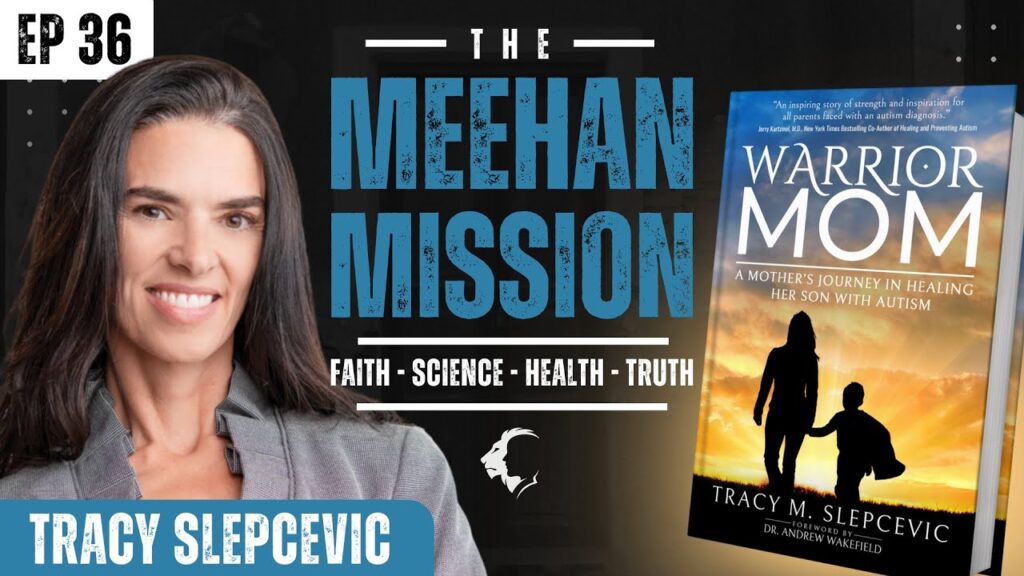
Cathy Meehan: Hello everyone. Welcome to another edition of the Meehan Mission Podcast. On today’s episode, I’m excited to bring you our special guest. She is an author, an advocate, a speaker, and an integrative health practitioner. Join us as we talk about her son’s diagnosis of autism and her journey toward healing. She is a guiding light to other parents. I want to welcome Tracy Slepcevic. Cathy Meehan: Hello again everyone, and welcome to another episode of the Meehan Mission Podcast. Today I am honored to have Tracy Slepcevic with us. Tracy, it’s so great to finally meet you. I want everyone to know that I found a copy of your book in Jim’s collection, and you actually autographed it for him. Thank you so much. That means more than you know. Cathy Meehan: I really wanted our audience to get to know you because you are truly a warrior mom. I read through your book, and several members of our team read it as well. They could not wait for this podcast. So if you would, please start by sharing your journey and how you helped your son through autism and healing. Tracy Slepcevic: Thank you, Cathy, and thank you for having me. My journey began back in 2008 when my son Noah was diagnosed with autism. On that same day, my naturopath—who I always say was an angel sent by God—changed everything for me. Tracy Slepcevic: After Noah’s evaluation, I was overwhelmed and emotional. I ran into Dr. Joshua Burka in the hallway, and he stopped me, hugged me, and asked what was wrong. When I told him Noah had autism, he looked me straight in the eye and said, “Noah is going to be fine. I need you to go home and do your research. Kids are making great strides with biomedical intervention.” Tracy Slepcevic: At the time, I was a psychology student, so I didn’t even know what biomedical intervention was—but I was determined to find out. That moment was my fork in the road. I could either collapse into despair, or I could get to work. I chose to get to work. Cathy Meehan: I love that—those words of hope were enough to carry you forward. Other moms need to hear that. Tracy Slepcevic: Absolutely. I set a very clear intention that Noah would be fine, and nothing—not neurologists, not pediatricians—was going to convince me otherwise. I became a research junkie. I read books, attended conferences, and started immediately with a gluten-free, dairy-free, soy-free diet to reduce inflammation. Tracy Slepcevic: From there, I worked with functional medicine doctors to address underlying conditions—gut health, immune issues, genetics like MTHFR, PANDAS, and high strep levels. I followed protocols carefully, but I also learned through experience what to avoid. Tracy Slepcevic: I caution parents about aggressive IV chelation in children and about hyperbaric oxygen therapy if ear pressure cannot be equalized. Every intervention must be done thoughtfully. Cathy Meehan: You were incredibly determined, intelligent, and focused. Did you have support during this time? Tracy Slepcevic: My husband and I were very much in this together. My family lived out of state, so support was limited. We struggled financially, bartered for treatments, negotiated costs, and sold nearly everything we owned. I became an expert at persistence. Tracy Slepcevic: When life felt overwhelming, I asked myself two questions: “What can I learn from this?” and “How do I move forward?” Those were my only options. Tracy Slepcevic: Today, Noah is doing incredibly well. He’s almost 20, works full-time, drives, and travels the world. Because of his journey, I’ve been able to help thousands of families through education, advocacy, and my nonprofit work. Cathy Meehan: That is such a testimony. It truly is a calling. Tracy Slepcevic: It is. This work is never about money—it’s about purpose. That’s why I created the nonprofit: to fund education, research, conferences, and scholarships for families who need access but cannot afford it. Cathy Meehan: Tracy, thank you for sharing your story, your wisdom, and your heart. It has been an absolute honor. Tracy Slepcevic: Thank you, Cathy. God bless you and your audience.
Dr. Ken Stoller Speaks Out: Vaccines, Autism, Medical Gaslighting & the Truth They Won’t Tell You
Cathy Meehan: Welcome to the Meehan Mission Podcast. This is a place where we like to look at truth in medicine. We also take a look at the current healthcare system, and we want to empower parents with options and choices for their health and the health of their children. Cathy Meehan: In today’s episode, we sit down with Dr. Ken Stoller. He’s a pediatrician—although he doesn’t like the word pediatrician—and he’s been battling for transparency in the vaccination program for a very long time. We’ll also discuss the lawsuit he has with the CDC, because what are the long-term effects and outcomes of children who have gone through the complete childhood vaccine schedule from birth through their teenage years? I don’t think we know that answer. So sit back, enjoy the show, and let’s begin. Cathy Meehan: Welcome to the Meehan Mission Podcast. Today I am thrilled to bring to our audience Dr. Ken Stoller. Dr. Stoller, I’ve heard about you, I’ve seen some of your work, and I’m so grateful you’re here today. Dr. Ken Stoller: Thank you, Cathy. It’s great to be here. Cathy Meehan: For those who may not be familiar with you, can you tell us a little bit about your background and how you came into this work? Dr. Ken Stoller: Sure. I trained as a pediatrician, but over time I became increasingly uncomfortable with the direction of conventional pediatrics, particularly the vaccination schedule. I began seeing children with chronic illnesses, developmental delays, autism, autoimmune conditions, and neurological issues, and I felt that the standard medical model was not addressing root causes. Dr. Ken Stoller: I transitioned into integrative and functional medicine because I wanted to understand why children were getting sick and how to help them heal, not just manage symptoms. Cathy Meehan: You’ve been very outspoken about vaccines and medical gaslighting. Can you explain what you mean by that? Dr. Ken Stoller: Medical gaslighting occurs when legitimate concerns raised by patients or parents are dismissed, minimized, or pathologized. In the context of vaccines, parents are often told that adverse reactions are coincidental, rare, or unrelated, even when there is a clear temporal association and biological plausibility. Dr. Ken Stoller: When parents are told “it’s all in your head” or “there’s no evidence,” despite their lived experience, that is gaslighting. It erodes trust and prevents honest scientific inquiry. Cathy Meehan: You are currently involved in a lawsuit with the CDC. Can you explain what that’s about? Dr. Ken Stoller: Yes. The lawsuit centers on a fundamental question: what are the long-term health outcomes of children who receive the full recommended childhood vaccine schedule compared to those who do not? The CDC does not have this data. Dr. Ken Stoller: Despite claims that vaccines are “safe and effective,” there has never been a properly designed, long-term, fully vaccinated versus unvaccinated study. That’s a major scientific and ethical problem. Cathy Meehan: That’s shocking to hear, especially given how strongly vaccines are promoted. Dr. Ken Stoller: It should concern everyone. Science is supposed to ask questions, not shut them down. When questioning becomes taboo, we’re no longer practicing science—we’re practicing dogma. Cathy Meehan: What have you personally witnessed in your clinical practice? Dr. Ken Stoller: I’ve seen children regress after vaccinations. I’ve seen immune dysfunction, mitochondrial injury, gut dysbiosis, and neuroinflammation. I’ve also seen improvement when these underlying issues are addressed and when toxic exposures are reduced. Dr. Ken Stoller: That doesn’t mean every child reacts the same way. It means susceptibility matters—genetics matter, timing matters, total toxic load matters. Cathy Meehan: Parents are often told vaccines are one-size-fits-all. Dr. Ken Stoller: And that’s simply not biologically accurate. There is no medical intervention that is risk-free for every individual. Vaccines should not be exempt from that reality. Cathy Meehan: What advice would you give to parents who feel intimidated or silenced? Dr. Ken Stoller: Trust your instincts. Ask questions. Demand informed consent—not just a signature on a form, but a real discussion of risks, benefits, and alternatives. And seek practitioners who respect you as a thinking, caring parent. Cathy Meehan: Dr. Stoller, thank you for your courage, your integrity, and your commitment to truth. Dr. Ken Stoller: Thank you, Cathy. Conversations like this are essential if we want real progress in medicine.
Alana Newman – Why Branding Matters More Than Ever in the Medical Freedom Movement
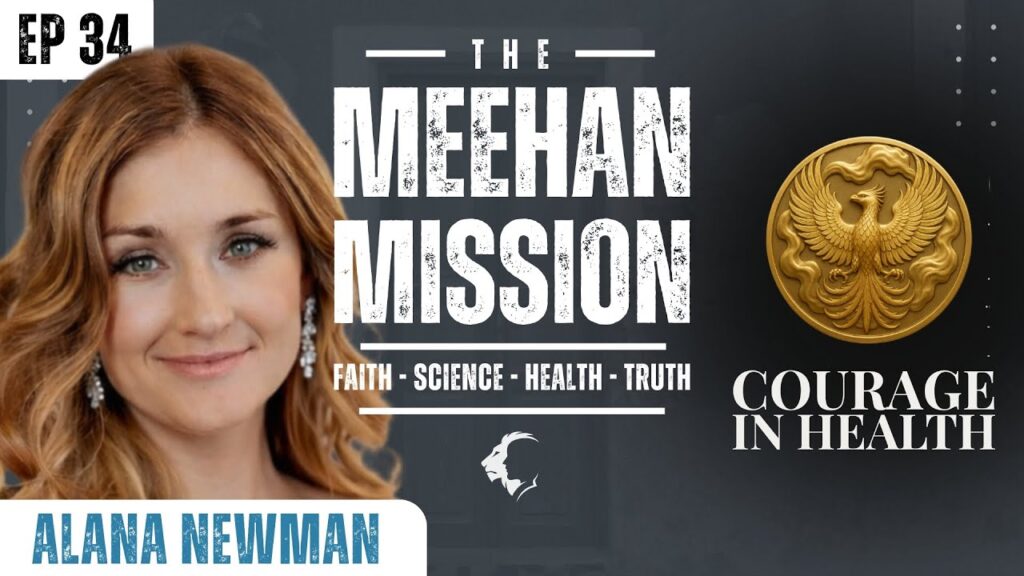
Welcome to the Meehan Mission podcast and today I’m introducing our community to Alana Newman. Alana is the founder of Brand Therapy. She’s an author and she’s also the host of her podcast, The Speaker Salon. So she is a very creative strategist and she hasv success in the music industry, documentary filmmaking and content production. Alana is one of those movers and shakers that helps you identify and craft your identity, especially when it comes to making lasting impressions online because this world is so competitive nowadays. So if you need help with your branding, then I hope you reach out to Alana and I am excited to share her expertise with you. Cathy Meehan: Hello everyone. Welcome to another edition of the Meehan Mission Podcast. And of course, as always, I like movers and shakers and people that can bring us a wealth of information to help further our careers, our health, just get us in the know. And today’s guest is Alana Newman. And Alana and I actually met—guess where?—in the medical freedom movement of course where all of us disruptors kind of gather. And I was just so excited that she agreed to do a podcast because everyone needs to figure out about marketing branding and what all is actually going on and Alana is just at the top of the field. So, Alana, if you would please introduce yourself to our listeners. I’d love for you to give a little bit of background on you and with your company, Brand Therapy. Alana Newman: Thank you, Cathy. I adore you. I’m so glad we met in Austin and I actually—we’ve online been entangled for a few years because it was you and Dr. Meehan who helped me with my kids during COVID and the mask mandates and you guys were the people who allowed my kids to breathe freely at school when they were requiring doctors’ medical exemption. So I am eternally grateful for you and for Jim for providing that and my interest in health freedom and the medical freedom movement has really informed just my role and how I want to contribute. And so I was a stay-at-home mom for a long time, but my history is art school and branding and I’m basically really good at Photoshop. And when COVID was announced, I knew that it was a scam and I started building a new brand called Health Freedom Summit, an online conference and was working that for two years and trying to give our people more dignity. So with conferences, with branding, with associations and graphics and imaging, you know, we were competing with big pharma in the COVID narrative. And now I have a book, it’s called Beauty First Method: Instantly Communicate Your Value. And I’m basically trying to help our people compete with big pharma and with our story, with our image, with our trustworthiness, and with our offers because what they try to do is they try to destroy everybody’s businesses. They make it so that we can’t go to work or participate in society unless we take their shots. And so I think the remedy to that is we are independent. We have our own businesses. We’re doing our own thing. And that requires branding and marketing. And so I am really fighting for freedom. And my biggest skill is that I have a trained eye and I know how to use Photoshop. Cathy Meehan: Yeah. Well, and I can attest to that. You have a great eye. In fact, I see a lot of marketing materials and programs and I’ve always loved your branding. You can tell when somebody just has that natural eye and they get the words right, they get the layout right, they get the colors right, and they get your attention. And in today’s world, you’re right, the competition is fierce. And especially the fact that there’s a lot of us that are independent, like we’re an independent clinic. I mean, how do we compete with these huge corporations that have unlimited budgets and they have unlimited resources? So, that’s really why I wanted to bring you on because when it comes to branding and imaging, how do you go about finding a specific person’s—like what their brand’s going to be like? Where do you start? It is so personal and excruciating for people to build their own brands that’s based off of like their soul. Alana Newman: And it’s so crushing when you are rejected based off of what essentially comes down to an expression of your soul. Like for someone to—for you to make an offer and put yourself out there on the marketplace of ideas and the marketplace of products and your babies, your brainchildren. You put your brainchildren out into the world and when people are like, “Oh, no thanks,” it’s soul-crushing or it can be. And so it’s a delicate process of collaborating with someone you trust and iterating. You iterate, you attempt that and you put it out in the world and what do you think of that? And I have a methodology that I work with people when they’re building something new that kind of takes some of the difficulty away. And the first thing is: who do you serve? That’s the number one thing is like whose problems do you not mind getting all up in and suffering alongside people? And with the case of Mindset for Kids and Meehan MD, you guys serve parents and kids and so you suffer alongside parents and their traumas and their woes and their worries. I’ve tried to kind of narrow my audience down to the health freedom movement to the best of my ability, but freedom-minded people in general, I’m interested in your problems. I am interested in helping you overcome things. And I think that’s where it starts. And then from there, after the “who do you serve,” it’s vibes. It’s so much of just