

Cathy Meehan: Welcome to the Meehan Mission, where we explore the intersection of faith, science, truth, and health, and we empower families to take ownership in their wellness. Today in studio, we are joined by our very own natural health consultant, Meg Sutton. So Meg is going to talk to us about building a resilient immune system because, face it, many of us will encounter an illness. Cathy Meehan: But what do we do to make sure that that duration of illness is short and we bounce back after we’ve been sick? And we’re also so excited because we are introducing the Meehan, MD wellness program. And guess what? The Adult Natural Health Guide is now available. So this is designed to help families decide when do we need to call the doctor, or when can something be taken care of at home? Cathy Meehan: We’re going to give you the tools and the resources to help you make those decisions. So for now, let’s get started and let’s talk to Meg. Cathy Meehan: Hello everyone, and welcome to another edition of the Meehan Mission Podcast. Today’s guest, the one and only Meg Sutton, our natural health consultant. And for those of you who have already met with Meg, you know what a brilliant mind she has. Because if you want to talk natural, holistic supplements, she is the go-to, and we are so thankful that she is part of our Meehan MD team. So, Meg. Cathy Meehan: Today I would love to talk to our community about building a robust immune system because everybody’s getting sick all the time, but what do we do to prevent that? And then the other part of this podcast is we are actually introducing the Meehan MD Wellness Program. You guys, it’s the Adult Natural Health Guide that we’ve all been waiting for. And finally, it is ready and available. But let’s start in the beginning, and that’s the immune system and when we get sick. So what do we got? Meg Sutton: So I wanted to back that up a little bit because when people get sick, they automatically think that their bodies are failing us. Cathy Meehan: But it’s the total opposite. Meg Sutton: Our bodies are made beautifully. We were designed beautifully to handle toxins, to detox properly. And I think of it more of a sign as our body working as it’s supposed to be. Cathy Meehan: So when we get sick. Meg Sutton: We want to support our bodies. The problem is, if you’re constantly sick, that can be where there’s a true issue going on, and we need to look at it. As kind of a rule of thumb, once or twice a year sickness, I think of a great detox. And so we want to support our body. If it’s more than that, then we need to look at kind of a deeper thing. But to support our immune system, it’s all about what we eat, reduce toxins. And we know that we live in a toxic world. The products we use on our Cathy Meehan: skin, the foods we eat, the water we Meg Sutton: drink. Let me go down that whole topic. Cathy Meehan: All of those Meg Sutton: things have toxins in it. And it’s our bodies are constantly trying to detox that out. Sometimes we’re unfortunate, and it’s stored for us to be able to detox at a later time. But we’re supposed to support our system, make sure we’re getting the appropriate nutrients, making sure we’re hydrated properly, and we reduce those toxins. So, how do you support your immune system typically? Cathy Meehan: Well, number one, you talked about nutrition. And you would think that somebody’s trying to, like, kill us when you have to talk about all of these environmental things. We’ve got the preservatives in our food, the seed oils, the dyes, even like the BPA on receipts that’s disrupting our endocrine system. And I always like to tell people, you can’t live in a bubble, but if we can reduce toxins, then we can also do things to support our immune system, which I think number one, it’s nutrition. You really got organic, whole foods, read labels. I mean, that is the most basic. Or don’t get anything that has a label. Let’s step it back. Meg Sutton: So I always tell people, if God did not make it like that, then rethink eating it. I know that’s kind of hard in this world, but let’s go back to the beginning. What did God create, and go with those foods. Cathy Meehan: Yeah. But if you Meg Sutton: do need to read labels, look for things like those dyes. And now they’re hiding certain words like monosodium glutamate. They’re changing that to Cathy Meehan: hydrolyzed Meg Sutton: yeast extract and stuff like that. So you kind of have to play this game of what are we really looking at? So if there’s more than five ingredients, you might want to put it away. Or if you don’t know the ingredients or can’t say the ingredients, maybe skip it. Cathy Meehan: Maybe skip over it. Or make it yourself. I definitely start nutrition-wise. And then the other part of that equation is a lot of our foods, even the healthy organic foods, they’re lacking the nutrients and minerals and vitamins and everything. So I know for me, my staple is vitamin D. That’s my staple, is vitamin D, to support my immune system. And I know that you kind of feel that vitamin D is very Meg Sutton: important. Very, very important. It’s important in regulation, but you also need the co-factors with it. For instance, magnesium is fantastic with it. It activates the vitamin D. Then you have vitamin Cathy Meehan: K, which helps Meg Sutton: direct the calcium and the vitamin D of where to go. So you kind of have to, I don’t necessarily
Eric Barber on How to Choose the Right Gym and Stick With It
Cathy Meehan: Welcome to another edition of the Meehan Mission podcast, where we like to talk about faith, truth, health, and science. And most of all, we want to empower you on your wellness journey. Today’s episode, we welcome Eric Barber, the founder of Barberic Training. And we’re going to talk with Eric about the options of where do we want to work out? Because remember, Nowadays, we’ve got options. You’ve got commercial gyms, home gyms, these fitness studios. So what is really going to be the best to help you attain your fitness goals and keep you committed and keep you on track? So let’s get started and let’s welcome Eric. Cathy Meehan: So here’s the big question. We started the workout or we’re going to start the workout, but where do I work out? So let’s talk to Eric Barber, the founder of Barberic Training and my personal trainer. Thank you very much, Eric, for transforming my life. And I would love for you to help educate our audience. You know, maybe they’re thinking about working out, but what are some things I have to consider about? where do they work out? Because there’s a lot of options out there. Eric Barber: Yes, there is. Great question. Loaded question as usual. Most people, whether they need to start working out for medical issues, for health issues, or whether they just want to train for appearance, know, changing their appearance, whatever, right? You got the broad spectrum. But they’ve decided to do something about it. Step one, right? Make that mental shift. I’m going to do this. So at that point, Cathy Meehan: As usual. Cathy Meehan: Thank Eric Barber: You’re looking at pretty much getting a membership at a commercial gym or you can get into something like what I would call a micro gym, which would be like your Orangetheory or your CrossFit or F45 or maybe yoga classes or Pilates classes, like a smaller studio or just a micro gym. And then after that, you’ve got training at home, you know, and that could be a garage gym. That could be an extra room that you’ve built out. I train people, I work out people that train at all three of those. Primarily though commercial gyms and home gyms or garage gyms. The micro gyms usually have coaches there but sometimes people come to me for extra help with changing their actual appearance of their body. Cathy Meehan: Yeah. Cathy Meehan: Yeah, I know that I had that option because I do have like a home gym, but yeah, it’s kind of dirty and run down and not that inviting. And then I had the option of the commercial gym, which is what I ultimately chose, which was best for my fit. But I’d love for you to walk us through like pros and cons of each one of those. Eric Barber: Yep. Yeah, I remember that. Ha Eric Barber: Yeah, so let’s start with the commercial gyms. gosh, man, I’ve trained everywhere. I’ve trained at Gold’s Gym, Powerhouse Gym, Bally’s, Holiday Health and Fitness, Lifetime, VASA, Crunch Fitness, Planet Fitness. I’ve trained everywhere over my past 35, 40 years. And I would say that for the price point, you can’t you kind of can’t go wrong with a commercial gym. They’ve got tons of equipment. Really it comes down to when you’re talking about commercial gyms, like I recently trained at a gym nearby and it was locally owned. It was owner’s gym and it was the size of a community gym, of a commercial gym. It was huge and this one dude owned it. And you know, Cathy Meehan: Okay. Eric Barber: the machines were breaking down all the time and wasn’t that clean, you know, the cleanliness wasn’t up to par. And so it was for his gym, it was too expensive. You know what I mean? He was charging too much. The bathrooms were always nasty, that kind of thing. when I vote now, when I look for a commercial gym, I look for one of the main chain brands, you know, like the or the VASA or the Lifetime something like that. I like how clean they are. I like all the little amenities. So sometimes when I do a brutal leg workout or brutal back workout, I want to lay in one of those hydro massage beds, you know? Or I don’t like tanning. I get a really good tan, but only if I build up to it. If I have a summer of just being pure white, Cathy Meehan: Yeah. Cathy Meehan: Yeah, those are sweet. Those are sweet. Eric Barber: and then I try to get out into the sun, usually burn, but if I maintain a safe tan throughout the winter, just tanning, their little tanning bed once a week, then when I get out in the sun, I don’t burn. So I do look for that in a commercial gym, that kind of thing. look for, I look at the equipment. I look to see if there’s a lot of pieces of equipment that are broken down. They’ve got those out of order signs on them. If I see two or three of those, during my walk around the gym for the first time, know, my introduction, you know, they’ll walk you through, they’ll give you a tour. If I see three or four machines with out of order, you know, that’s a red flag for me. I look for clean bathrooms. I have to have a clean bathroom. Saunas are nice, pools are nice, steam rooms. I don’t think they’re the most sanitary. I don’t see how they can be. You know what I mean? Cathy Meehan: Yeah, that would be. Cathy Meehan: I kind of agree on that one. Eric Barber: Yeah, I’ll go into a dry sauna, but I don’t go into the steam rooms. creep me out. Cathy Meehan: You
Ashley Pena, LPC-C on Helping Kids Navigate Anxiety, Attachment, and Emotional Health
Cathy Meehan: Too often we hear these words: anxiety, depression, trauma, attachment disorder. Okay, people, what is going on in our world? Every day we are hearing more and more people struggling with emotional health. So on today’s episode, we are going to introduce Ashley Pena, LPC-C. She has her master’s degree in clinical mental health counseling and works with Ellie Mental Health, which has clinics throughout the United States. Ashley happens to work here in Tulsa, Oklahoma, but I wanted to invite her on the podcast so she could share her experience, offer some guidance, and let everyone know that if you, your child, or someone you know is struggling with emotional health, therapy can be the answer. Cathy Meehan: Hey everyone, it’s Cathy with the Meehan Mission podcast, and today I am delighted to share the screen with Ashley Pena, LPC-C. She is a counselor with Ellie Mental Health, and I was just so excited. She came by the office the other day, and there is so much information out there on children nowadays and the anxiety and just all of the problems that, you know, in my generation, I don’t think we had as many mental issues, if you want to call it that, or just anxiety. And our poor children nowadays, they need people like Ashley. So what I wanted to do was introduce Ashley to our listeners so she can help kind of give us the other side of the picture and, you know, give us some insight. If we’re having children that are experiencing some issues, or if we have friends with children, we need to share this podcast. I’m just inviting Ashley to please spill your brain out for us. And I probably want to start with what got you interested in working with children in the first place when it came to the mental health field? Ashley Pena, LPC-C: Yeah, it’s not your typical story, honestly. I happened to be at my husband’s barbecue for his company, and I had the opportunity to notice a particular parent interacting with his child who had a diagnosis, or has a diagnosis, of autism. And just the way that he interacted was so caring and empathetic. And I’ve seen other families not be able to be so caring or empathetic and be more stressed with it. So it really helped me to see that I really would like to support those that maybe need some more help and more resources so that they are able to interact in the same fashion, regardless of their situations. It doesn’t just have to be with autism. And so I ultimately found myself drawn to children specifically to allow them different avenues to communicate what’s going on and describe how they’re feeling. And working with families allows me to support the entire system—the parents, their grandparents, even siblings, anyone that comes in contact with the kids. Because everyone plays a huge role in the environment, emotionally and physically. Over time, I’ve learned that when I get to support the child and the family, the healing becomes more sustainable. That blend allows me to work with prevention, intervention, and connection, which continuously keeps me passionate about the work. Cathy Meehan: That’s so great. Well, when you are dealing with the children and you talk about bringing the families in and everything, I mean, we hear all these things about the breakdown of the nuclear family. And I think that probably adds to miscommunication between parents. And so many of these little things that we don’t think about really affect the children more than we anticipate. And I say that in like, you know, children always want—I always thought they want stability. They want to know what’s happening. So children in their younger years, what do you find as far as age-related anxiety problems? And are they getting younger and younger? And what do you attribute to that? Ashley Pena, LPC-C: You know, it’s an interesting question because if you look at 20 years ago, there’s a lot of technology that we have today that we didn’t have before. Some can argue that that would contribute to that anxiety, but I also think just our environment in general has shifted so much that the generations we have grown up in have changed in the way that they want to approach parenting and involvement with their families as well. And I feel like there’s a lot of connection that has been lost. Cathy Meehan: Yeah, I agree. I mean, I’ve seen it over the years too. The family dynamics have changed, the introduction of social media, which, you know—so is that as big of a problem as I hear? Because my children are now in their twenties and thirties, and I know it kind of had an impact on them younger. But what is the influence of social media on kids nowadays? Ashley Pena, LPC-C: It’s interesting because if we’re looking at currently today, I’ve noticed a lot of the kiddos that I have worked with are saying they don’t even want to connect to social media because it’s just so much doom and gloom and so much negativity that they’re finding that they don’t even want to connect to social media the way kids five or ten years ago did. It really just depends on how much interaction these kids have with social media, access to the news outlets, and what type of information they’re being fed and inundated with, and how their parents approach it as well and communicate it to them. Cathy Meehan: Yeah. Well, I mean, I know now I have grandkids, and they are getting cell phones and all that. And just for my personal information, it’s scary, right? The information that these kids can come across when it comes to social media, and also with the algorithms that are going on—you click on one bad site, and then that’s all you’re going to get are
Erin Paige on Homeopathy, PANS/PANDAS, and Why Parents Are Reconsidering First-Line Care
Cathy Meehan: Many years ago, the practice of homeopathy was popular among practitioners when it came to healing ailments of their patients. But what happened? What gave homeopathy such a bad rap? Where did it go? And is it actually having a comeback? Well, I tend to think that it is having a comeback. So today’s episode of the Meehan Mission podcast, I want to introduce everyone to Erin Paige, who’s a homeopathy practitioner. She’ll help answer your questions, give you some great guidance. So let’s get started and let’s welcome Erin. Cathy Meehan: Hello everyone and welcome to the Meehan Mission podcast. And I am thrilled to introduce our audience to Erin Paige. And Erin, you are with Heartwing Healing. And what I love is to bring movers and shakers and just people that are, I don’t know if you wanna call it disrupting the healthcare system with natural and alternative solutions. But you study homeopathic medicine and I think, you know, there’s a lot of questions behind that. And my idea was let’s bring Erin on, someone who is, you know, deep into homeopathy and just really help share your knowledge with our audience. So first of all, welcome to the show. Erin Paige: Thank you. Cathy Meehan: You bet. And we go back a little bit because we both kind met up in the world of child medical freedom is what it would have been. And so we go back quite a ways and you are someone that I really look up to when it comes to finding answers and educating people. So if you don’t mind, start with a little bit of background on how you chose to go down the route of homeopathy. Erin Paige: Yeah, well, thanks so much for having me, Cathy. So my journey really began maybe about 15 years ago. My son was diagnosed with a very severe autoimmune neuroimmune disorder called PANS or pediatric acute onset neuropsychiatric syndrome. For those of you who are unfamiliar with that diagnosis, it looks maybe a little bit like autism, with a little bit more emphasis on some of the psychiatric kinds of symptoms. But that occurred. I simultaneously was diagnosed with Lyme disease. So I had always been in the realm of natural medicine. My son’s father is a chiropractor. And I went to actually took my son to a pediatrician. who you’ve had on the show, Dr. Bob Sears, and asked him for some information because I didn’t know what was going on with my son. And at the time, and now we’re talking 15 years ago, he was not as familiar with the diagnosis and recommended that my son’s father and I do some research. Well, I went into mama bear mode and was up at all hours of the night trying to figure out what I could do to help my child. And the one consistent intervention, although we’ve tried many, many, many things over the years, was homeopathy. I always tell the story that at the time my son was living inside a cardboard box in my living room. He had not left the house for well over a year and had not left the cardboard box in about three months. I gave him his first dose of homeopathy and he asked if he could leave the house that day twice. So it really was very eye-opening to me. I was not really that familiar with homeopathy. But I knew that it was going to be something that I would need to pursue for the health of my child. And we’ve been utilizing it ever since. Cathy Meehan: Wow, what a heartbreaking story for a mom. I just, amen, you went into mama bear mode just to find any solution that you could. So will you explain to us what exactly is homeopathy when we hear that term? Erin Paige: Yeah. So homeopathy, in its foundational principle is essentially like cures like, we’re looking for the simillimum. So Samuel Hahnemann, developed homeopathy in the early to mid 1800s. And he was medical doctor and he postured that, he was utilizing, trying to find a cure for malaria actually. And so he was utilizing a, cinchona bark, which is a, you know, from, from the plant, from the tree. And he found something very interesting when he was trying to figure out the curative mechanism of action. He took some of the cinchona bark and it actually mimicked in him as a healthy person, the symptoms of malaria. So he began postulating that if then he could induce symptoms, perhaps he could treat symptoms with the cinchona bark in malaria patients. But he wanted to find out how little of a dose he could give because obviously he didn’t want to have his patients experience more symptoms from taking the cinchona bark. He just kept titrating lower and lower and lower on the dosage until essentially what he came up with was versions of really a more energetic kind of a dose of these kinds of materials that would then still elicit a positive response. So it’s introducing the minimum dose within a patient and then in order to create a positive immune response. And the patients were getting better taking cinchona bark for malaria, for example. But in the 1900s, homeopathy, well, just so you’re aware and your audience is aware, about 10 to 20 % of all doctors within the United States, even in the early 1900s, were homeopaths. And I know you’ve talked about this before, but because of the creation of entities like the AMA and their takeovers of the medical colleges, they essentially pushed out homeopaths by way of introducing various licensure agreements and things like that, which homeopathy just didn’t have the financial backing in order to continue at that. So it essentially wiped out homeopathy within the United States despite the fact that, you know, like I said, 10 to 20 %
Eric Barber on Beginner, Intermediate, and Advanced Training for Adults and Kids
Cathy Meehan: Maybe you’re just getting started training, or maybe you’ve been training and working out for quite some time. Well, it turns out there’s definitely different levels of training. So today’s episode on the Meehan Mission podcast, we’re going to talk with Eric Barber with Barberic Training, and he’s going to help walk us through the different levels, because we want to make sure that we’re avoiding injuries. Cathy Meehan: We’re staying motivated, and we’re doing what our body’s meant to do. So let’s welcome to the show where he talks about the levels of training for adults, and also his take on levels of training for kids. So sit back, take some notes, share with your friends and let’s get started. Cathy Meehan: Welcome to another episode of the Meehan Mission podcast. And as you see, I have Eric Barber, our favorite online trainer. Hey, Eric. Eric Barber: All right. How are you? Cathy Meehan: Great. So I brought Eric on today because I know a lot of us may be jumping back into training, but there’s also some of you that you might already be advanced or you might be intermediate. And I just wanted Eric to help explain the differences in those levels, because I know some people that are going back to the beginning, maybe they haven’t worked out in a while. Cathy Meehan: Maybe you’re actually going to be a beginner, even though at one point in time, maybe ten years ago, you were advanced. So, Eric, if you can help walk us through those differences and how, you know, we can navigate our workout plans using those levels. Eric Barber: I love it. This is right up my alley. Great question. To me, in my brain, everything breaks down to, beginner, intermediate, advanced, and then elite. Okay. I don’t really pay attention with anything. Elite. I’m not training somebody to be a better swimmer or to be, a better basketball player. You know, that extra 10% that professionals need. Eric Barber: That’s not what 99% of personal trainers and all of us out there doing. We’re more geared towards helping people get fitter, stronger, faster, that kind of thing. So elite training needs to go to the specialists. So that leaves us with beginner, intermediate and advanced. And I think at 56 years old, I think that anybody who has taken a long break from working out should be humble and put themselves right back at a beginner level, even if it’s only for a month. Eric Barber: Because if if a person builds consistency when the workouts are easy, right? And at a beginner level, they’re going to want to keep going to the gym and you want to leave the gym wanting just a little bit more, especially in the beginning. That’s the that’s one of my secrets. Every time I’ll take a break from working out, let’s say it’s, let’s say life happens. Eric Barber: And, you know, it’s been two months since I worked out on a regular basis. And I know that if I try to go in and do what I normally do, I’m going to get busted up right? So I need to be humble. And I don’t necessarily take myself down to a beginner’s level, but I definitely go from advanced down to intermediate. Eric Barber: So the intermediate person who has spent time in the gym years in the gym, but they’ve had months or even years off, they need to go back to a beginner’s level. Just be humble. Even if it’s just for one month. Trust me, I know what I’m talking about on this one. So, if you if you do that and you make consistency, the, the, the main point rather than the intensity or anything like that, you’re going to find yourself getting into the gym on the second month and the third month and the fourth, and then it becomes habit and then you’re back into your, your, your shape again or better. Eric Barber: Yeah, I know, I. Cathy Meehan: Know for me, because I had to go back to beginner because it had been years since I had worked out. And really what you taught me was that consistency. Number one, I needed to kind of like reevaluate my daily lifestyle and how I was going to fit in, you know, going to the gym and doing all those things that it was that consistency and, you know, changing my schedule a little bit. Cathy Meehan: And you’re right, I, I worked out just enough that I wasn’t so sore that I didn’t. Eric Barber: Right. Cathy Meehan: Despise going to the gym. Eric Barber: That’s right. Cathy Meehan: That I actually wanted to go to the gym. It made a huge, huge difference. I see probably a lot of people fail in that area if they, you know, they wake up and they can’t move, then they have no motivation. They don’t want to go to the gym. Eric Barber: I see that more often than not, I see people go in there, hit it hard for a week or 2 or 3, and then they’re just like, holy moly, you know? And I just can’t. You know what I mean? That’s that’s not the right way to go about it. As we get into our 40s, 50s, 60s, when you’re young, who cares? Eric Barber: You’re bulletproof. You can, you know. Cathy Meehan: Bounce right. Eric Barber: Back. Yeah. You can beat yourself up and bounce right back. But yeah, as we get older, we get more responsibilities. We’ve got, you know, previous injuries that. You know what I mean? Whatever medical conditions, it’s you have to be smarter now as you have to train smarter than, than ever before as you get older. So yeah. Cathy Meehan: And I would think in addition to a workout plan, you know, you also have

Meg Sutton: How to Choose High-Quality Supplements + Top Natural Health Picks for Whole-Body Health
Cathy Meehan: How many times do we go to the store to buy a supplement and we have no idea what we’re looking for or what is the best quality? Where is it resourced? The industry for supplements is massive. And on today’s episode of the Meehan Mission podcast, I’m going to introduce everyone to Meg Sutton. Now, many of you know Meg because she is our natural health consultant here at MeehanMD. And I just have to tell you, her brain is so full of knowledge and her ability to educate patients is just phenomenal. I love having Meg here as our special resource. So many of the things that Meg does is she does curate and go through all of the products that are on the Mindset Wellness Shop. She also leads the team when it comes to alternative therapies. She is also very involved, like I said, with the education of patients and writing our health guides. But most importantly, she is the go-to for patient education. So please like the video, subscribe to our channel, share with people so that we can continue the mission of education. And most of all, let’s meet Meg. Cathy Meehan: Well, hello everyone and welcome to the Meehan Mission podcast where we explore faith, science, health and truth. And we like to empower families with knowledge. So today I’m joined by someone who many of you already know, Meg Sutton. And Meg is our natural health consultant. She is a key member of our team at MeehanMD. She oversees the Mindset Wellness Shop. She guides patients through supplement questions and natural remedies. She helps lead our alternative therapy support for cancer patients. She’s also the author of the Mindset Kids Natural Health Guide. And I think you’re also working on an adult one, the MeehanMD Natural Health Guide for Adults. So we’ve got a lot to go through. Meg spends so much time educating patients and working with them. just to help kind of cut through the confusion. So Meg, welcome to the show today. Meg Sutton: Thank you, it’s great to be here. Cathy Meehan: You bet. Well, let’s get started kind of from the beginning. What really spawned this like passion that you have for natural health? Because you are the go-to for natural health. Meg Sutton: So it’s, I’ve been very lucky. I grew up in kind of the natural health realm, thanks to my mother. It wasn’t until a family member got sick that I decided to cut through all the noise and get certified in naturopathy. So I went, I think it was in 2016, I think it was, and learned about how our bodies are designed, how God made us, how to support them naturally and help those around me. So yeah, a little bit about that. Cathy Meehan: Well, that’s great because we love the wealth of knowledge that you have. So my question is, how did you end up at MeehanMD? Meg Sutton: Hahaha! actually used to work in the corporate world. It wasn’t until I wanted to join a political action group here in Oklahoma, Oklahomans for Parental Rights and Vaccine group. What’s the… Okay, HPR, and I probably got that wrong. So sorry. It’s changed a couple times. That’s why. Cathy Meehan: We’ll flash it up on the screen. Meg Sutton: Yeah. disclosure, I am not… I’ve never been vaccinated and so I’ve always had a passion to educate people on vaccines. And so I joined the group and I met your lovely husband at a legislator’s lunch. Didn’t know who he was. I went there to educate the legislator on vaccines and parental health. And when I was about to ask a question at this luncheon, he pops his hand up and asks pretty much the exact same question that I was gonna ask. And I turned to my friend who was with me at that time and I’m like, who is this? I need to know who this guy is. So that’s when we started our friendship and I met you, your lovely wife, Ms. Kathy. And we had a blast going to the Capitol and educating legislators and anyone else that would listen. We might’ve ruffled a few feathers. But that is fine. And it wasn’t until fast forward, we’d been working together that you and him found out that I had a background in natural health. You really wanted to get that off the ground. And I was looking to get out of the corporate world. I did marketing, I did revenue services, dispute resolution, all of that stuff. And that’s when you guys offered me this job and it has been an absolute dream. And I feel like I’m with family and I absolutely love it. I love taking care of people. Cathy Meehan: yeah. Well, and also I do have to add that you have that mission, attitude and just belief in your body, which, know, I do, I pride MeehanMD and all of the team members that are here because our goal is to be that resource and that help and that education. And so that is really what I think it makes us so much different than a lot of the other clinics that are out there is that we really want to empower the patient with education. And I know you do so much of that. But let’s talk about one of the main things that we use your brain for. And that is when a lot of people don’t want to have prescriptions or they just want to like supplement their body. And your knowledge is so deep when it comes to different types of supplementation. And if we can just kind of start because the industry is massive. Meg Sutton: It is massive. And the marketing behind it is even bigger. Cathy Meehan: Right, right. So how do patients actually know, where do we start? Quality? Do we
Reflexes Part 3: The Hidden Blueprint of Brain Development | Dr. Laura Hanson + Cathy Meehan
Cathy Meehan: Hello and welcome back to the Meehan Mission podcast. We are in a special three part series on reflexes with Dr. Laura Hanson. So if you go back to part one, we discussed withdrawal reflexes. Part two was primitive reflexes. And on today’s part three episode, we’re going to discuss postural reflexes. Which you might consider this part of our anti-gravity system because that’s what keeps us upright and balanced and coordinated. We are going to talk about how posture actually connects to our neurological health. We have to remember movement isn’t just physical, it’s part of brain development. So sit back, take some notes, share the podcast and let’s learn more. with Dr. Laura Hanson. Cathy Meehan: Hey everyone, and guess what? It is our final part three of our three-part series, talking about reflexes with Dr. Laura Hanson. And today we’re gonna talk about postural reflexes. And I am so glad you are back again today. So Dr. Laura Hanson, please take over. Dr. Laura Hanson: Okay, here we go. We’re gonna now tie our bow around our reflexes. We started off with withdrawal reflexes. This is our earliest defense system. We have to know how to protect ourselves, how to get away from something. This actually builds that same kind of pattern up in the brain that says, I need to put the brakes on connections and things that are not really necessary for me to focus on right now. How do I get that runaway brain to stop? You have to know how to put the brakes on. Then we made a beautiful transition into the world of primitive reflexes. You have transitions throughout your entire life going from being a newborn to a toddler, to riding a bike, to going to college, to getting married, there’s just transitions all through our life. The reflexes, the primitive reflexes are part of that transitional process. But the day that you are born, that is when postural reflexes begin. Cathy Meehan: Okay. Dr. Laura Hanson: So think of that little baby coming out of the birth canal. I love the story of birth and how that baby travels like a Tootsie Roll through the birth canal. And it literally gets all balled up. And then it’s going to open up and be birthed by extension. That is what happened to every one of us if we got to go through the birth canal. Cathy Meehan: Mmm. Cathy Meehan: Okay. Dr. Laura Hanson: So the first thing you do is you begin interacting with gravity. And what is that thing that everybody notices about the newborn? Look, they’re picking up their head. I love that part because we’re already doing it, but we have to bring the rest of the body with us. So at the end of our second episode, Dr. Laura Hanson: We finished with the little baby holding them up and that the stepping reflex is automatically there. But you pull your hands away and the baby would come down because we are not wired in gravity yet. And it takes us a year to get there. And we practice, everything we do, we practice. Dr. Laura Hanson: So we move along, we get into locomotion, we crawl along, then around 10 months you get into cruising. And that’s when you pull yourself up on something and you walk along the furniture, but then you bounce. You’re practicing those joints in gravity. And so there’s a little motion pattern in every single joint as you’re getting ready to start walking. You can compress, you can pull apart, you can rotate, and you can translate. And so when those babies are just sitting there bouncing, that’s exactly what they’re doing. They’re saying, I’m getting ready, because I’m going to take a step, and I’m going to be ready to do that. Now, what does the baby look like? When the baby stands up, because their head is so big, Cathy Meehan: Okay. Cathy Meehan: Yeah. Dr. Laura Hanson: In comparison to their bodies, their legs are bowed out initially, and that’s okay. And the arms go up, this is called high guard. And they’re literally like little teeter totters out there, practicing their balance in order to know that they will be able to walk one day. And they’ll start to practice that pattern. And then down the road, the hands will come down. we’ll start to have reciprocal arm swing around four years old, and our legs will actually turn in a little bit. And this is for the Q angle of the hip because the bones cannot or the muscles cannot keep up with the growth of the bone. So your hip joints literally accommodate this growth in gravity. Okay? Now, by around Cathy Meehan: Mm-hmm. Cathy Meehan: Okay. Cathy Meehan: Mm-hmm. Dr. Laura Hanson: seven and a half, eight and a half, legs should be straight. We do not want excessive bowing and we do not want excessive turning in. It’s not just about the legs. So all of your body is responding to this process. So there are eight anti-gravity muscles. Two of them, if they are weak, they will literally drive the other six to shorten up. And I don’t want you to think shortened is contracted. It’s not that. A contracted muscle is like me flexing my bicep, okay? A shortened muscle, you actually lose sarcomeres. And sarcomeres are that individual muscle motor unit. Cathy Meehan: Okay. Dr. Laura Hanson: Just like when a woman is pregnant, she gets more sarcomeres so that her belly can grow, okay? And all of these have neurological feedback that is going on in that body. But if I lose sarcomeres, then the back of my legs for the hamstring, they’re too short. And literally, I can’t straighten my leg. I have seen kids… Cathy Meehan: Mm-hmm. Mm-hmm. Dr. Laura Hanson: five, six, seven, eight, could not straighten their legs to save
Reflexes Part 2: The Hidden Blueprint of Brain Development | Dr. Laura Hanson + Cathy Meehan
Cathy Meehan: Hello everyone and welcome to part two of our three part series on reflexes with Dr. Laura Hanson. So in part one, we covered withdrawal reflexes. Those are the earliest proactive patterns that begin wiring the nervous system in pregnancy. And today we’re gonna talk about primitive reflexes. These help with birth, feeding, bonding and early movement. These ones are meant to integrate in the first year of life as the brain’s maturing. But what happens when they don’t? Those might show up later as anxiety, sensory issues, learning struggles, or even poor coordination. So let’s break it down with our special guest, Dr. Laura Hanson. Cathy Meehan: Hey everyone and welcome to part two of our three-part series on reflexes. And we have back again, Dr. Laura Hanson, who I absolutely love your mind. I love how you educate. And we talked about withdrawal reflexes in part one. So if you haven’t seen that yet, people go back to that episode. But right now we are going to talk about the second one, which is primitive reflexes. So let’s talk about, you know, this little neurodevelopment in our little bitty babies and our little children and how that influences the rest of their life. So take it away, Dr. Hanson. Dr. Laura Hanson: Well, thank you so much for having me back. I love to talk about reflexes. So just a very brief recap. This is a sequence of events. And I really believe, too, over time, we will even discover more reflexes that are actually available to that central nervous system. But the majority of them have a tendency to be put into these categories. Cathy Meehan: Yes. Dr. Laura Hanson: So the withdrawal reflexes are the earliest defense system. So the first thing that we learn is how are we gonna survive. And that is going to influence how we see ourself in the world. Do we see ourself safe in the world? And it’s not like somebody’s doing something to the child. It’s literally their own little internal compass. But then after that gets laid down, My favorite word, and I use it all the time, is transition. That’s a really big word for the central nervous system. So you go from defense mode into, I just want to be with everything. I just want to go towards everything. So if you did listen to the first one, we talked about how that withdrawal reflex is part of how the inhibitory pathways in the brain get built. So you either go towards or you pull away. You have to learn everything that you are able to do. You have to learn it somewhere. So that’s what we’re unfolding for you is where these things come from. So this transition, we’re now gonna learn how to go towards something. Cathy Meehan: Right. Dr. Laura Hanson: and be part of it in order to make that part of our central nervous system. Now, the three reflexes that I want to highlight in this little segment are Moro reflex, ATNR asymmetrical tonic neck reflex, and tonic labyrinthine reflex. These are three that typically are very connected. Cathy Meehan: Mm-hmm. Dr. Laura Hanson: And typically, if you have one that didn’t integrate, all three of them didn’t integrate. So one of the things that I’ve noticed in 30 years of practice is that is a very true element of how I was taught. And sometimes people will tell me that, well, we got that one resolved and we’re still working on this. And sometimes we have to understand how they overlap. Cathy Meehan: Okay. Dr. Laura Hanson: And there’s just no way for one reflex to be able to disappear when their timelines for coming on board and their timelines for integration are very connected. So it’s important to really kind of get that background. But let’s start with the word transition. So you go from being in the womb Cathy Meehan: Okay. Dr. Laura Hanson: to the outside world. That’s a transition. So it’s not just, it’s a big transition. You go from being a newborn to laying on the floor. You go through a transition on how to be a toddler, how to learn how to be potty trained, how to go to kindergarten, how to be apart from your mom longer and longer to being school age. Cathy Meehan: Big transition. Yeah. Dr. Laura Hanson: to adapting to an environment, to transition to college, to adult life, to a career, to buying a home. Transition is through our whole lives. So it’s a big one and it’s connected to either that if you go forward at that time, you’ll go into Moro, ATNR, palmar, all of that. Cathy Meehan: Wow, and those are big milestones. Dr. Laura Hanson: or you could get locked up in fear paralysis, meaning that there’s so much stress that’s going on, you don’t know how to go forward. And so we can have kids that are kind of stuck in that transition. And so that’s an element of the reflex world, okay? Cathy Meehan: Mmm. Mmm. Cathy Meehan: Wow. just keep thinking of all the problems you hear now with young teens and kids and anxiety and depression and they can’t go forward. mean, kids that they don’t want to get their driver’s license at 16. I mean, that one, I’m like, how do you have a child that doesn’t want to get their driver’s license at 16? it’s like, wow, it’s almost like you’re connecting dots that I’m thinking of some of my friends’ kids and grandkids and Dr. Laura Hanson: Yes. Dr. Laura Hanson: Yes! Dr. Laura Hanson: All right, next. Cathy Meehan: Wow, Dr. Laura Hanson. Yeah. Dr. Laura Hanson: And remember what we said in the first one. They don’t know how to tell you that that’s what’s going on inside because their library got stuck. They only have what they have, right? And that’s
Reflexes Part 1: The Hidden Blueprint of Brain Development | Dr. Laura Hanson + Cathy Meehan
Cathy Meehan: Today, we’re diving into something almost no one in mainstream pediatrics really fully explains, and that’s reflexes. I’m Cathy Meehan with the Meehan Mission Podcast, and my special guest today is Dr. Laura Hanson. She is a wealth of knowledge, and she’s with ConnectMyBrain.com. So we’re talking about reflexes. So not just like those ones you get at a checkup where they hit your knee and your leg bounces up, but those early automatic movement patterns that literally build the brain. We’re actually gonna do something special. We’re breaking this into a three-part series. And so today we are going to talk about withdrawal reflexes, and then we’ll release part two, which is primitive reflexes and our final third part of the series is postural reflexes. So get ready and take some notes, share the podcast with your friends and people who are needing to know, and let’s get started. Cathy Meehan: Hey everyone and welcome to today’s episode. Like we talked about, this is part one of our three part series, Reflexes, the Hidden Blueprint of Brain Development. And who better to tell us all about reflexes and what we need to know is Dr. Laura Hanson. Dr. Laura, thank you for joining us today. Dr. Laura Hanson: It’s always a pleasure. This is probably one of my favorite topics. So I’m happy to share some information with your audience. Cathy Meehan: That is great. Really, we just really need to start from the very beginning and talking about reflexes. And like I said, you are the best person to give us this information and let’s really start. Why do reflexes matter in the first place? Dr. Laura Hanson: This is actually the beginning of the wiring of Baby Human. I can remember a long time ago when I first got this concept, and it’ll be about our third part that we get to, postural reflexes. And I said, well, wait a minute. If posture is out there, what comes before that? And then it leads you to, well, what comes before that? And reflexes are literally the earliest connections for baby human. So a lot of talk is out there about sensorimotor. Reflexes precede sensorimotor. In fact, when you’re a baby inside the womb and you’re reflexively moving and moving different body parts, you’re actually setting up what will become the sensorimotor cortex. On top of your brain. So always think of it. I love to talk about reflexes or development from this idea of dominoes. You know, people build those beautiful abstract pieces of dominoes and then it only takes one little push and the whole thing comes down. Imagine what it would be like if one of those dominoes was actually out of place. The Cathy Meehan: Yeah, a great visual. Dr. Laura Hanson: Information or the force would stop and then you could push it again but there would always be that piece taken out. So reflexes are that idea that are often overlooked thought that you know they come in they do something they go away and you never need them again but you do. You need them to build the appropriate circuits. They all have different timelines, but even to kind of put some context into it, if something happened to you or me, we would go back into our brainstem and we would begin to relearn movement patterns, reaction to things in the environment. Cathy Meehan: Mm-hmm. Dr. Laura Hanson: Because it’s the rudimentary place of all learning. So I remember back around 2004, my mom had a stroke and I was working on her body one day, her left arm, and she had a right-sided stroke. So the left side of the body would have been impacted. And I remember getting in over her hand and literally she went right into a palmar reflex. So remember when babies are just little bitty babies. Cathy Meehan: Mm-hmm. Dr. Laura Hanson: And you put your finger into their hand, they just reflexively, yes. So you go back into these in various parts of time because it’s a way that the central nervous system actually knows how to learn. So go ahead. Cathy Meehan: Did the little grip. Mm-hmm. Cathy Meehan: It’s so amazing. I just want to stop right there because that is so amazing when you think about just how important early, early development is. It’s not after the baby’s born. We are talking such early development in those basic little steps. It’s so important. Dr. Laura Hanson: No! Dr. Laura Hanson: Well, Bruce Lipton actually talks about whatever’s going on with mom and dad a few weeks before conception will also shape conception. And he termed the phrase conscious parenting. We’ve got to be aware of what it is that we’re doing before we ever conceive these babies because Cathy Meehan: Mm-hmm. Mm-hmm. Dr. Laura Hanson: It starts immediately the shaping of their central nervous system. Cathy Meehan: Which we could go into a whole other segment about prenatal care before you even conceive. So yeah, yeah. But the reflexes part, just the neurodevelopment of the little tiny, little tiny baby. Yes, we’ll continue with that and keep educating us. Dr. Laura Hanson: Yeah. Dr. Laura Hanson: Yeah, that’s a big one too. Absolutely. Dr. Laura Hanson: Okay, so this is the one, the first part is actually called the withdrawal reflexes. So that’s what we’re going to focus on here in part one. I personally think this is one that many different therapists are really not trained in. Over the years, I will ask parents, well, did you do the withdrawal reflexes? And they go, I don’t know what that is. And then they’ll ask the person that they were working with. Cathy Meehan: Okay. Dr. Laura Hanson: Did you do the withdrawal reflexes? And they go, I don’t know what that is. So the very first thing that baby human learns is how to defend itself.
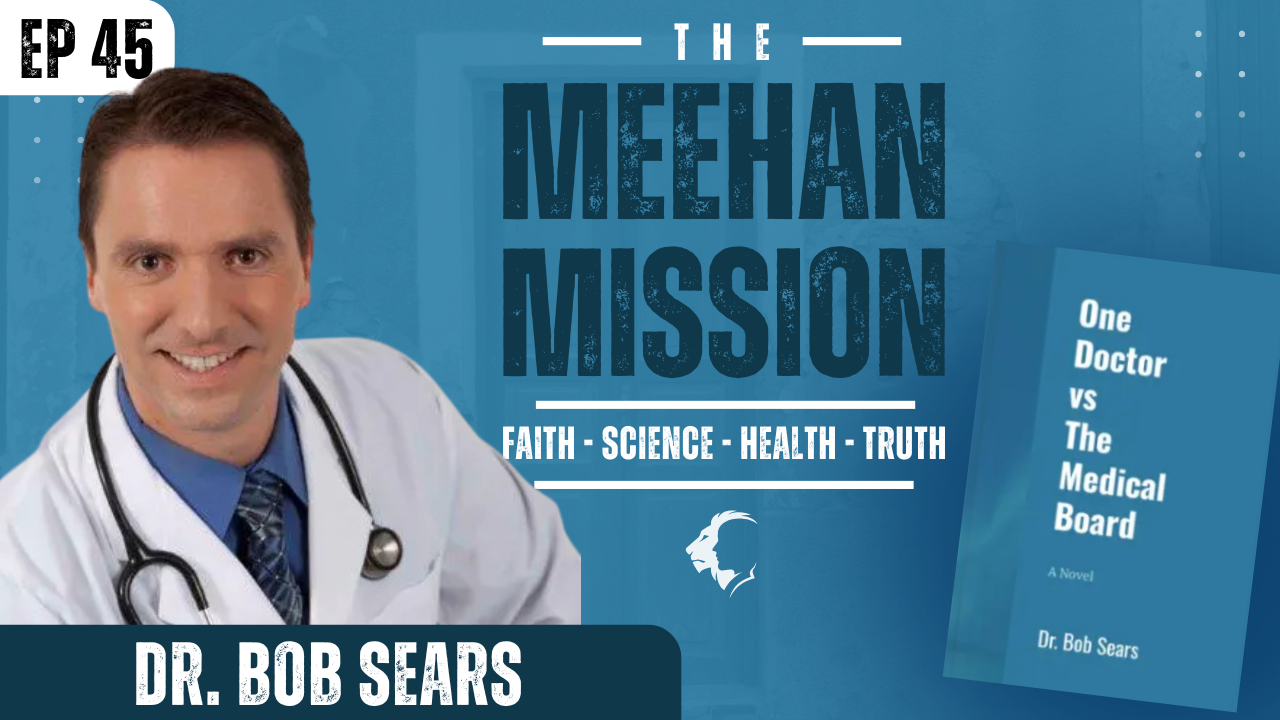
Dr. Bob Sears on Vaccine Safety, Medical Freedom & Facing the Medical Board
Cathy Meehan: Welcome to this edition of the The Meehan Mission Podcast. This is where faith, science, truth, and health intersect. And I like to introduce you to the movers and shakers in the world. Today’s episode, we’re joined by Dr. Bob Sears. He is a pediatrician and an author who’s been fighting for our kids and medical freedom for quite some time. We’re gonna talk about his books, how he sees the future of medical freedom, and just what we can do to share our information with parents so they’re informed too. So let’s get started. Cathy Meehan: Well, hello everyone and thanks for joining us. I’m Cathy Meehan and on today’s episode, I have the marvelous Dr. Bob Sears. Hello, Dr. Sears. Dr. Bob Sears: Hello, Kathy. I’m super happy to be on your show. Thanks for inviting me in. Cathy Meehan: Hey, you bet. And so listen, what I wanted to do was I’ve recently been introduced to you. I think we met at MAPS last year. And then more recently, I got to know you from the Physicians for Informed Consent meeting we had over in California. And I was just so excited because I’ve heard your name a lot. You have been fighting for our children, for quite a while and you are one of those doctors that I call a mover and a shaker. You’re not afraid to share your opinion and you are not afraid to tell the truth, right? So what I wanted to do is bring you onto our audience so they could get to know you if they didn’t already know you and then also talk about some of the great exciting things that you write about to help educate other parents and people wanting to know more information. So to get started, I’d like to hand the microphone over to you. And if you could give us kind of like a little background on not, doesn’t have to be like three days long, but a background on, you know, how did you get into pediatrics and what made you the disruptor that you are? Dr. Bob Sears: How long is your show? No, I’ll give you the two minute version. You know, my dad is a pediatrician and so I kind of always grew up, you know, watching him enjoy what he does. And he told me, you know, Bob, if you can go into business for yourself and not have a boss, then that’s a great way to make a living. And so I, listened to him. And I, you know, in medical school, I was just really drawn towards pediatrics because I love working with kids. But I also found I really like working with parents and there’s sort of jokes that go around in medical school and in pediatrics that the parents are like, you know, the big problem and no one likes dealing with parents. But I love dealing with parents and because I was a parent too by that time. And so I think having my own kids really allowed me to. empathize with my patients. And so I loved pediatrics and so I went to medical school, a pediatric residency, and then I joined my dad’s practice here in Southern California in 1998. I never looked back. And the whole vaccine thing kind of… It came my way, because in Georgetown, where I went to medical school, I was trained that vaccines are great. And I actually used to think that they were great and that they were totally harmless for everybody. But at Georgetown, I got exposed to a book that a friend of mine made me read. And my wife and I needed a place to stay. And we had our baby and we were essentially homeless looking for an apartment around or somewhere to stay. And a friend of mine said, well, you can stay in our apartment, in our house, as long as you read this book. And that book has since become much more popular. But back then it was a very obscure book. It was called A Shot in the Dark. And it was written by Barbara Lowe Fisher, who started NVIC, the National Vaccine Information Center that we all know now. And of course, Candace Owens did a special called A Shot in the Dark. And I think that was a tribute to this original book that really this book is what shone the spotlight on vaccine reactions. And I read that book, it opened my eyes. And once you read the science on vaccine reactions, you can’t forget it. Cathy Meehan: Yes, her series. Dr. Bob Sears: And the science was very solid, even back in the early 90s when I was reading this information. So that’s what got me started on this. Cathy Meehan: So it was interesting. So it was kind of like a give and a take. I’ll give you some room if you read this book. And, you know, I find that really interesting because there so many pediatricians out there today that we present the material or we’re just like, just look into some of the research or the lack of research and they won’t even look at it. I mean, how do we break that cycle? with physicians when we’re just trying to get the information to them. How do we break it? Dr. Bob Sears: Yeah, you know, Kathy, honestly, I don’t think you break this cycle with currently practicing pediatricians, especially if they’ve been in practice for a number of years. I just don’t think they’re open minded. I read this book, Kicking and Screaming. Like my wife told me, you know, you got to read this book. And I’m like, I’m a doctor, you know, why do I need to read this book? Literally, you know, and And but I did it, you know, for my family and I’m very glad I did. And