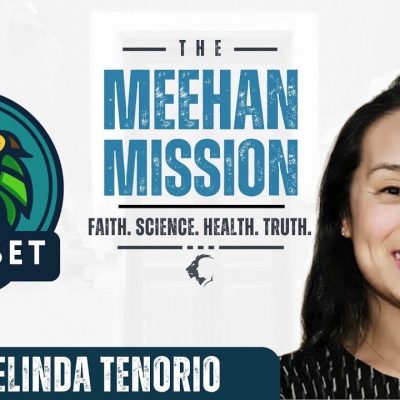
Cathy Meehan: More and more parents today are looking for answers beyond simply treating symptoms. They want to understand why their child is struggling with chronic illness, allergies, digestive issues—the list goes on and on. And that’s where functional medicine comes in. Instead of just a pill for every ill, functional medicine is going to ask what’s happening in the first place. Today I’m joined by Dr. Melinda Tenorio. She’s one of our functional medicine pediatric providers at Mindset Kids. We’re going to discuss what is functional medicine and how that looks in pediatrics. And we’re also going to offer how parents can support their children’s health naturally because we want to build a strong foundation for lifelong wellness. So, let’s get started and let’s welcome Dr. Melinda Tenorio to the Meehan Mission podcast.
Cathy Meehan: Hello everyone, welcome to this edition of the Meehan Mission Podcast. I am thrilled because today we are introducing one of our fabulous pediatric physicians with Mindset Kids. I have with me Dr. Melinda Tenorio in the house. Hello, Dr. Tenorio. How are you?
Dr. Melinda Tenorio: Good. I’m so happy to be here with you guys today. I’m so excited to be invited on your podcast.
Cathy Meehan: You bet. I mean, who knew we’d be doing this? I sure didn’t know that, but I love bringing people together, introducing people to the community, and this was the opportunity to share your knowledge and just who you are and your dedication to our children’s health—because I really appreciate that you’ve chosen this path and the fact that God crossed our paths and that you are part of Mindset Kids is just such a blessing. So that being said, Dr. Tenorio, I would love for you just to introduce yourself to our community and, you know, I don’t have to know from birth to current date, but really, what motivates you and what is your desire for helping kids?
Dr. Melinda Tenorio: So, I’m glad that you mentioned that God had crossed our paths because when you and I first met, I had found your website, dropped my name, and I hadn’t heard anything for a little bit. And it was at that point in my medical career where actually I was a little discouraged about where we are in medicine with our children. And as God would have it, January of 2025, new year, I found you. And it was just from there like a domino effect. It really gave me the spark and the motivation to just put my foot down and say, “This is not the way I want our children to grow up.” I want our children to be healthy, I want our parents to be informed, and I want them to have longevity. You know, nowadays almost 20 to 30% of our children have some kind of chronic issue. And it’s not a chronic issue that we would have thought of 10 or 15 years ago, like congenital cardiac issues. Our children are suffering from diabetes, high cholesterol, and obesity. And our community does not see it as something chronic, but it is. It’s a little scary that we may outlive our children, we may outlive our generation. So, this is why I was so fortunate to have found Mindset Kids.
Cathy Meehan: Yeah. Well, you know, I remember that because, for people who don’t know, we started at the conference table in the spring of ’23 with the whole concept of how do we bring holistic functional medicine and empower the parents with decisions when it comes to their child’s healthcare. And so, this has been a long journey and we found Dr. Tenorio who was just like this perfect match because she had this desire and this hunger to help kids and to really transition from the conventional western medicine into functional medicine. But I just want to ask you, Dr. Tenorio, were there specific instances where you were like, “Wait, we’re doing something wrong,” or was there an aha moment where you realized you had to do something different?
Dr. Melinda Tenorio: Definitely. You had asked me a little bit about my background. So I am an allopathic doctor, and I have a combined experience in primary, emergency, and urgent care medicine. In the last 5 years, I had transitioned to primary care, and as a pediatrician working in the primary care setting, I was like, “There’s something going on here. I don’t understand.” Lots of children are coming in with eczema and asthma. I’m running the tests that I should be running to pinpoint where their allergies are coming from, and a good majority of them are coming back negative. Parents are scratching their heads saying, “But then why are they always congested? Why is the eczema so bad?” Nothing is coming back positive, and I realized something else has to be going on. There’s a connection that I’m missing here—and it’s definitely the *gut microbiome*. So yeah, it was when I re-entered primary care again where I was like, “I am missing something. I’m not getting the result at this job.”
Cathy Meehan: Yeah. So you know that’s very interesting because I often talk about the lack of critical thinking in doctors. I myself was a pharmaceutical rep back in the day. I remember I would go in, present a paper with all of these symptoms, and say, “So, Dr. Smith, if your patient has these symptoms, prescribe this medication.” And that’s really all we did. It was a pill for every ill; that’s what we pushed. It was nothing like checking their gut microbiome, changing their lifestyle, or adding nutrition, sleep, and all of those into it. And really, after my husband Jim started doing a deep dive and research, we realized it’s the critical thinkers in this allopathic world that are breaking out. They’re the ones crossing that line and coming over into functional medicine. For the parents in our community, can you describe why functional medicine is different than allopathic or conventional medicine?
Dr. Melinda Tenorio: It’s exactly how you explained—functional medicine should incorporate everything: our mind, our spirit, our diet, and our exercise, because we are meant to function. Our body is a miracle; it is a miraculously engineered machine. It is smart and knows how to take care of things. Unfortunately, with our lifestyle and other things going on around us, we’ve lost that. We just want things to be fixed fast without finding the root cause of why we got sick in the first place. That is my hope with the patients I take care of and their parents—to really break it down. It almost sounds too simplistic, but it’s not. It is definitely the support for our health. It uses everyday, basic things to make our body work, rather than a big pill or an IV.
Cathy Meehan: Yeah. And not only that, but it is extra work. I think a lot of people are looking for quick fixes in the world that we live in; we want convenience, fast, and easy. I know for a fact, even in our adult population, we’ll have a patient come over from the allopathic world where they’re just used to a pill for every ill, and they decide they want to really heal. They come into our clinic and we’re like, “Okay, well, we’re going to start with the M.I.N.D.S.E.T. acronym, and we’re going to focus on Microbiome, Inflammation, Nutrition, Detox, Sleep, Exercise, and Total hormone balance.” And that patient is like, “I don’t think I’m going to do that. I really like just taking my pill for every ill,” and they leave. I just wish people would take the time to focus on their health. What is something that parents can do to encourage their children to focus on their health? Because a lot of what parents do, kids do. Where should parents start?
Dr. Melinda Tenorio: Definitely, they should do their research and find a like-minded provider, because some parents face a bit of a stigma, which I don’t think is fair. You come to speak to a provider, and it is your choice if you want to stick with that provider and take their advice. I don’t think as a provider it’s our job to just say, “Do this, do this, do this.” It only works if it comes from you, like you’re saying—you have to put the work in. Slow and steady really wins the race, and you have to put the work in.
Cathy Meehan: Mhm, yeah, that makes so much sense. So, when you were growing up, I just have this question: Were you that kid that questioned everything? Is that how you got your critical thinking skills? And how can parents incorporate critical thinking skills into their kids?
Dr. Melinda Tenorio: I guess I’ve just always been a curious child. Even if it was just Legos, I’d ask, “Well, why doesn’t this fit, and why does it fit this way?” For parents, information is power. They should do their research and actively decide what their children should do. Children learn best by example, so it’s not just about us suggesting a plan for the child—I always tell parents it’s easier if the whole household does it. Especially for the moms, everybody will be better off with the changes we suggest, and timewise it’s just easier because you’re not planning separately for yourself and your child. Also, community—like a Mindset community—is very important because people waver when things get hard. Having a community to reach out to helps keep the momentum.
Cathy Meehan: Yeah, and I have noticed that. We’ll get parents that contact us because they’ve heard of Mindset Kids, and they themselves were questioning their own pediatric experience. They felt they were being mandated into doing things, rather than being given a choice or being empowered by that physician. They contact us and feel like they are alone because the news, the schools, and social media push this narrative that gives functional and natural holistic medicine a bad name, like it’s “woo-woo medicine.” But it’s not. Actually, natural holistic medicine was around long before pharmaceuticals came in. Seriously, it was before pharmaceuticals. If parents want to go research the Rockefellers and go down that trail, they’ll see where natural holistic medicine was frowned upon by big tech and the pharmaceutical industries so that they could have patented drugs and make money, because there’s a lot of money in the allopathic world when it comes to pharmaceuticals. When you start to treat a patient, you do an assessment. I’m going to guess that your first line isn’t a pill for every ill. How do you think outside of the box for treating patients?
Dr. Melinda Tenorio: Actually, my first question is always: “What are you guys eating at home?” Food is definitely medicine. It brings people together, and it gives your body the nutrition it needs to support and heal itself. It’s always my first question. I always ask, “Tell me, what do you guys do for breakfast? Do you sit down and have breakfast together, or are you in a hurry because it’s the school year and you’re in a rush?” I think that’s very important. And sleep—I don’t think people sleep anymore.
Cathy Meehan: Yeah. Well, a couple of things I tell people are: turn off your social media before you go to bed, get rid of all the lights, and sleep in a dark room. But you’re right, are parents really setting that example for their kids? I wonder.
Dr. Melinda Tenorio: Yes. It’s hard, and I always tell parents that this is not judgment—we are not perfect, we are all projects in motion. Sometimes we are naughty because an email comes in that has to be answered at bedtime, but we have to be the example and say, “Okay, this can wait until the morning.” A good bedtime routine with children is something they will remember when they grow up, like, “Oh yeah, mom said I have to turn the lights off and no TV, and she gave me a kiss and a hug and tucked me in.”
Cathy Meehan: Yes, yes! Bedtime routines, I love that. Well, our family went through a transition because we used to eat fast food a lot. It was fast, convenient, and easy. Our pantry was full of high-sugar cereals and bad stuff—like toaster strudels, that was a staple in our diet. What we did is we just slowly and gradually started replacing things with healthier versions. I agree with you **100%** when it comes to nutrition and what you put in your body; that is the best place to start. So many diseases are actually cured just by changing your diet—it’s insane. What are your thoughts on how much fast food people are eating, or where they’re getting their food? How do you coach parents on nutrition?
Dr. Melinda Tenorio: Well, I try to be cognizant of the fact that it’s expensive sometimes to eat organic—and that’s the truth. Also, I don’t ever want children to feel deprived or singled out. Let’s say a child really has a gluten allergy; when he’s at school and everybody else is eating certain snacks, there are many things nowadays that can be substituted—like better chips, fresh fruit, or even going the route of frozen vegetables because it’s more economical. It doesn’t have to be as fancy as we make it up in our heads. Just keep a list in mind. Maybe you do have to go to the grocery store every week instead of doing one gigantic haul of food that stays on your shelf for months at a time. But I always try to encourage parents and let them know there are many alternatives—nobody needs to feel deprived. There are special occasions, and maybe not everyone in our circle of friends is quite where we are, but there are always healthier options available even on restaurant menus. You don’t technically have to avoid all of them.
Cathy Meehan: I like to think of how we slowly started substituting things in our pantry. Another thing we did is limit the number of times we went out per week. Back then, I was working, Jim was working, we had five kids, and it was crazy. We would do Taco Bueno on Monday night and Wendy’s on Wednesday night. But I like to think food was healthier back then—I don’t know if I’m just justifying that or not—because the ingredients allowed in our foods today are horrific. I am hopeful that there will be more restrictions and guidelines limiting the chemicals, preservatives, and dyes currently allowed in the US food system. I personally believe, and I’ve seen the research, that it’s those seed oils and preservatives contributing to chronic disease in both children and adults.
Cathy Meehan: If we can lessen those chemicals and additives, the better. Again, we can’t all eat organic, but if you look at a grocery list where someone is buying soda pop, chips, and sugary snacks, those are not nutritional for the body. If you take that same dollar amount and buy fruits, vegetables, and meats—which takes some prior planning and preparation—I think you’re probably going to be spending about the same amount of money.
Dr. Melinda Tenorio: And I think you’re right. It’s not excessively more to buy something fresh or organic if you do the math and plan your shopping list wisely; it’s definitely doable. Another way parents can empower their homes is by actually reading labels. If there are a lot of things you cannot pronounce, it’s probably not good for you. The shorter the list of ingredients, the better it is. That’s not even about being fancy or knowing all the chemical names—if you can read it and pronounce it, it’s most likely good for you.
Cathy Meehan: Yeah. You just talked about the length, because I’ve seen some labels where the ingredient list is so long you’re like, “Oh my gosh, not only can you not pronounce it, but it is so long.” That’s such a good point: shorter is probably better. Definitely reading labels, and I think that goes hand-in-hand with teaching your children to be critical thinkers. While you’re in the grocery store, bring your children along, have them look at the labels, and ask them questions like, “How many ingredients are in there? Do you think these are healthy?” Or have them pick a healthier alternative, even with things like cereals.
Cathy Meehan: Nutrition is definitely key. Another thing I want to talk about is our environment and the toxic things around us, because I don’t think people realize the impact of chemicals, whether they are absorbed through our skin or ingested. What can you tell us about detoxification and how to eliminate these things around children?
Dr. Melinda Tenorio: It’s a step-by-step process for people. Food is a good place to begin, and the next would be the products we use for our hair, our skin, and our home. It’s the same thing: reading labels, doing research, and looking for things that are “old-fashioned.” Think about detergent—what people used before was really simple, like baking soda and borax, which is even more economical than buying expensive fragrance-free and supposedly “clean” detergents. We have to realize that toxicity comes not just from what we ingest, but from things we put in our hair, on our face, our lotions, and even makeup for women.
Dr. Melinda Tenorio: Yes, I’m guilty of that, sorry! [laughter] Nobody’s perfect, and there’s a bit of give and take, but a lot of things will balance out. If you have that one guilty mascara but you are on top of your diet and exercise, your body’s detoxification system can do what it needs to do if you have to wear mascara that day.
Cathy Meehan: Yeah, and then we do it. So, trying to hit on some of our mindset acronyms—let’s talk about exercise. What are kids doing nowadays for exercise besides exercising their fingers for scrolling? What do we do?
Dr. Melinda Tenorio: I try to tell parents that the goal is 150 minutes, but that’s for the whole week—so roughly 30 minutes a day, preferably outside because we need vitamin D. It’s unbelievable how many people are vitamin D deficient, and it’s because we are in front of our screens and our children are playing video games. I always encourage a quick walk after dinner, especially when the season is good for a walk. You incorporate exercise, family time, and vitamin D.
Dr. Melinda Tenorio: It’s good to have a limit on children’s social media or video game time, though it’s hard with the times we live in. I don’t think any child can be fully shielded from it because it’s part of their education at school with iPads. But even with that being said, there are lots of free YouTube exercises for children that are kid-friendly—anywhere from kid yoga to calisthenics that you can do together. Things like that also help with coordination. I remember back in gym class we used to have to do the crab walk; people don’t do that anymore, but it actually helps with arm coordination. Definitely make it a family or sibling thing if you have older children—playing basketball outside, throwing a Frisbee around, taking a bike ride. It doesn’t always have to be strenuous exercise; it can be as simple as a walk.
Cathy Meehan: Yeah, and not only that, but it’s free. It doesn’t cost anything to go take a walk. I feel like more parks are springing up, at least in the Tulsa area—we have a fabulous Gathering Place down here, and there is a tendency for people to start going outside more. Maybe this is a wave of the whole “Make America Healthy Again” movement—thank goodness, I love that. No matter your political view, if you don’t want to be healthy, you can go find something else. But I think that wave came at a time where we were almost at a point of sink or swim, because the health of our children today is pitiful—it really is pitiful. The more we make people aware of healthier options, the better. I feel for the kids who don’t have parents acting as critical thinkers, because kids need direction, guidance, and support to stay healthy.
Cathy Meehan: This brings me to the mental health of our children nowadays. I know that mental health is not your specialty, but have you seen a rise in anxiety, fear, and labels in children? I don’t remember all of that when my kids were little; they were just having a good time.
Dr. Melinda Tenorio: It is unprecedented. Aside from COVID, I grew up and trained in the city, so those were things we only expected from children in highly unfortunate situations; it was not the majority of children. In the last 5 years, I couldn’t understand why 6-year-olds and 7-year-olds were anxious, and why almost every other child I saw was being given a label of ADHD. I’m not saying it’s not a justified diagnosis, but I felt like almost every other child was somewhere in that realm, which I had never seen in my training working in two big cities like New York and Miami. It wasn’t something I saw with such regularity until the last 5 to 8 years.
Cathy Meehan: Yeah, that’s so hard.
Dr. Melinda Tenorio: And that’s with no real traumatic event that would make sense for the child to have these kinds of conditions. It used to be an unusual situation that explained why they had anxiety, but now it’s everywhere—city life, country life. I realized: “What is going on here?” There is something that we as physicians are not connecting the dots on, and kids are falling through the cracks.
Cathy Meehan: Yeah, I wonder about how much we expose these young children to. They see what’s on social media or television, and there’s all this bad news. I don’t believe in completely sheltering children, but I often think a lot of this stuff is not age-appropriate. Believe it or not, I could not see a PG movie until I was 13 years old, no questions asked. Nowadays, little kids are going to PG movies, but there is a reason for those ratings. I wonder if they’re not mentally prepared for a lot of the stuff we throw in front of them.
Dr. Melinda Tenorio: No, I agree. I remember having to close my eyes at a movie when they said, “Okay, close your eyes.” Some of that has been lost. The internet and social media obviously provide us with a lot of good information if we use it wisely, and we as parents still have to be the gatekeepers of that. It’s hard to shelter them, and information is power—they don’t have to walk to the library anymore like I did, but they have to use it wisely. We as parents have to decide what is developmentally and age-appropriate for them to be watching, and really monitor the internet and their phones.
Cathy Meehan: Yeah, I agree. Age-appropriate is really what we need to remember, because adults have brains with more experience to live through disasters and fearful things, but these kids are overly exposed. I suggest people use their critical thinking skills when it comes to what their children see. But let’s talk about when you do have a sick child and you’re seeking help or alternatives. I want to talk about preventing sickness in the first place. How do we help parents just prevent illness in our children? Where do we start?
Dr. Melinda Tenorio: Multivitamins, hand washing, and saline sprays in the nose after a day of being exposed to other friends, viruses, and bacteria. It’s just really simple—just like your mom or grandma would say: “Did you wash your hands before you started eating?” And like I said, being outside in the sun, taking our vitamins, and a good diet will help prevent us from getting sick. Sickness will happen—somebody sneezes at the store and you’ll catch a virus. But hopefully, your body will be attuned and able to detoxify that virus quicker, meaning lesser symptoms and a shorter frequency or duration of illness because you have a good baseline of health.
Cathy Meehan: I like that. I also want to note, because you mentioned vitamins, I recall that conventional western medicine doesn’t necessarily think that supplementation or vitamins are necessary. My thought is our foods really aren’t as nutritious as they used to be. What’s your theory on why we should probably use vitamins and supplements?
Dr. Melinda Tenorio: You’re absolutely right. Food is not the same as it was 20 or 30 years ago in terms of nutrition. And because we are a fast-paced world, most children eat on the run and do not eat things that are nutritious for them, so we are lacking. Of course, the body prefers to absorb its nutrients from food, but if you are eating something that is lacking its nutrients, then you need to help the body along to be able to do its part. I think supplementation with a multivitamin is absolutely necessary.
Cathy Meehan: Yeah, I agree. Even as adults, when I ask people if they take a multivitamin, a lot of times they say no. The other thing is quality—you have to use your critical thinking skills to look at quality vitamins, and there’s enough research online where you can pick your quality. How do you encourage parents to be more confident in their children’s care? Is it through education or pep talks?
Dr. Melinda Tenorio: Yes, absolutely. Unfortunately, with our fast-paced lives, sometimes conventional doctors only get to spend 10 minutes with a patient. We need a little bit more time, because that’s why they come to us—they need encouragement, knowledge, and information to make the correct decisions for their children. It’s not for us to mandate, “Take this, take this, take this.” It is for us to give the information so that the parents, and even a child who is old enough to think on their own, can make the right decisions. When a child makes a decision for themselves, I think it sticks better. Especially for children who are old enough to feel the difference in changing their diet, it’s not a question for them because they say, “I feel great, so I always want to feel good. I’m just going to eat this way and exercise this way.” As providers, that is a very important role, and unfortunately, in the standard system, we are not given the opportunity or the time to do that role properly.
Cathy Meehan: Yeah. Well, it’s always been my belief when you’re stuck in the allopathic world of conventional medicine that the goal wasn’t really to heal a person like you do with functional medicine; the goal was to just give them something for their symptoms. You obviously weren’t comfortable doing that, you wanted to figure out what’s really wrong and dig a little deeper, which is what functional medicine does. It looks at adjustments, tweaks, diet, exercise, and sometimes doing some genetic testing to see what is actually happening with that patient and noticing their environment.
Cathy Meehan: There’s a lot of mold toxicity now, which falls under detox. Mold toxicity seems to be skyrocketing—I don’t know if it’s because we’re detecting it more, but we’re constantly getting patients in who have mold issues, and once they solve those mold issues, their health gets so much better. It comes back to education, knowing how to use those critical thinking skills that I love Dr. Tenorio has, and trickling those skills down to your children so they grow up to be critical thinkers. It’s a true passion of mine, and I’m so thankful, Dr. Tenorio, that our paths crossed because you have been such a blessing. Do you have any last words for parents when it comes to the health of their children?
Dr. Melinda Tenorio: I’d like to say that I hope you come and find us, because myself and your other providers are looking forward to helping you and helping your children be the best versions of themselves. That’s probably my closing statement: our goal is to make you the best version of yourself, because each and every one of us is unique and we are not to be compared to anybody else.
Cathy Meehan: Oh, I love that. And I’m just telling everybody, we get nothing but compliments about Dr. Tenorio. All of our patients love you, our staff loves you, and we are so thankful for you. For anyone looking for functional medicine pediatrics, educating parents, and getting that power back, please visit us and share Mindset Kids with your friends. Our goal is to be the vessel for God for hope, healing, and options to empower parents for their children’s wellness. Everybody have a very blessed day. Dr. Tenorio, I’ll be talking to you again very soon. Thanks so much for your time.
Dr. Melinda Tenorio: Thank you so much for having me.
Cathy Meehan: You bet. Bye-bye.
Dr. Melinda Tenorio: Bye.